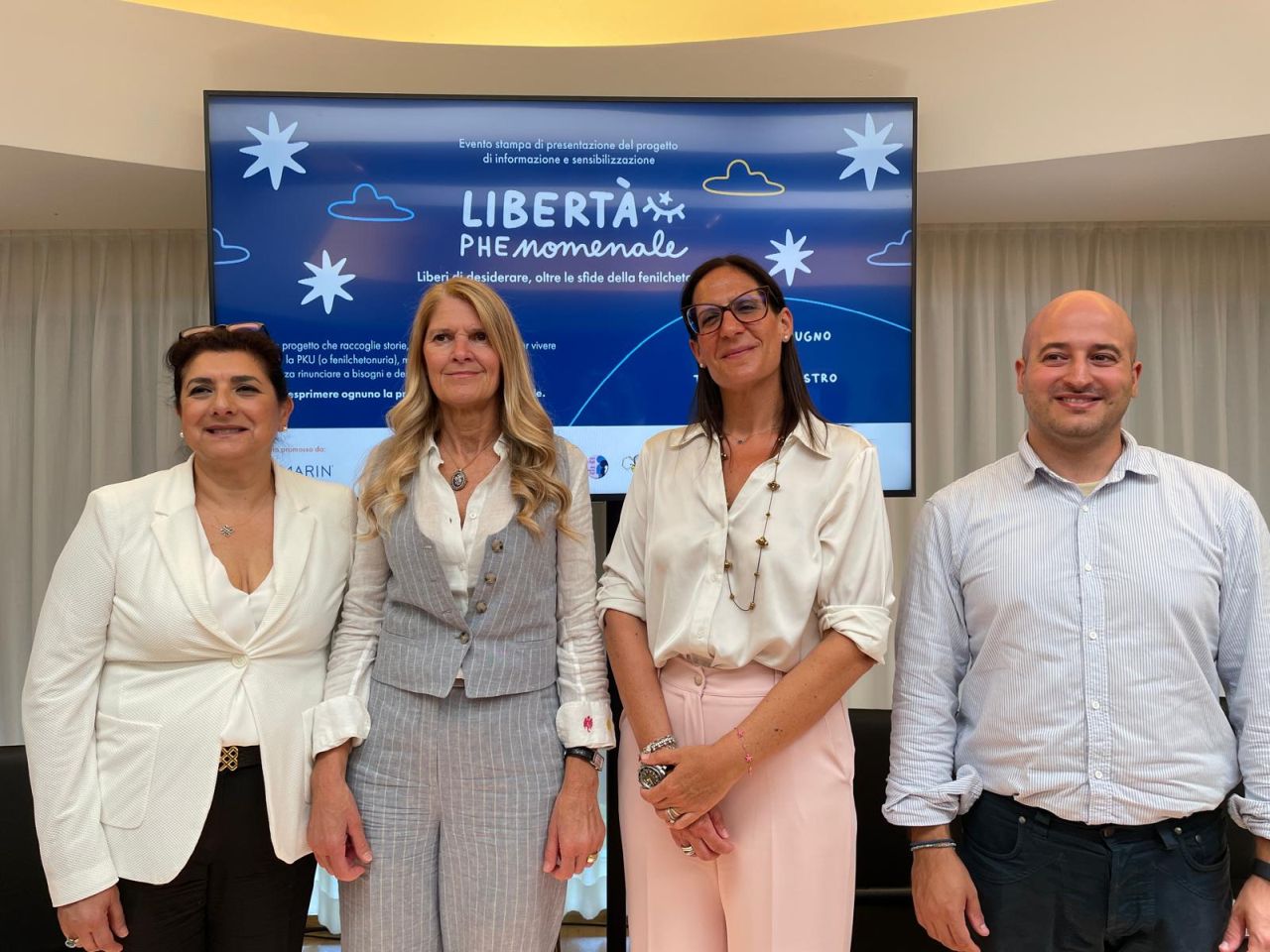
MILAN (ITALPRESS) – Follow an extremely restrictive diet throughout your life, requiring constant attention, planning and daily renunciations: it is what people have to do with phenylchetonuria (PKU) not to risk their health. But only 11% can always remain faithful to the diet with foods for special medical purposes. And 56% declares that the disease has an important impact on its relationship with food. Those who are born with PKU cannot properly metabolize phenylalanine, an amino acid present in the proteins contained in the most common foods, such as meat, eggs, dairy products, cereals, legumes and dried fruits. Thus, in order to avoid neurological damage, people with PKU, since birth, must follow a diet based on low protein foods and food prepared ad hoc. The consequences go well beyond nutrition: 51% of people with PKU signal a high impact on social life, 44% on friendships and sentimental relationships and 41% report difficulties in relationships. It is the picture that emerges from the Elma Research survey carried out on 72 people with PKU and 8 caregiver under the project “PHEnomenal Freedom. Free to wish, beyond the challenges of phenylchetonuria”, promoted by BioMarin with the patronage of 8 Associations of Patients, and presented in Milan on the eve of World Day of PKU (28 June). A project aimed at informing and sensitizing dialogue with the reference specialist, for new spaces of freedom and concrete answers to needs and wishes. At the heart of the project the lives of Gabriele, Cristina and Geneva testify, through their experiences, how can one live more freely, despite the phenylchetonuria and the daily challenges that this disease entails. Their stories are collected on the website www.libertaphenomenale.it along with information tools, testimonies of the clinicians and the Quaderno dei Desideri, designed to accompany people with PKU in the daily management of pathology and in the main areas of life: sociality and conviviality, travel, well-being, sports, work and study, planning of the future. “The management of the PKU is traditionally based on a dietary therapy that accompanies the patient throughout his life – explains Graziella Silvia Cefalo, Pediatra expert in the study and care of the Metabolic Hereditary Diseases, Head of the Simple Structure of Rare Diseases at the S.C. di Pediatria, ASST Santi Paolo e Carlo di Milano, Polo Universitario – a low-protein diet that is essential to maintain phenylalanin levels and protect neurological development. It is an effective approach from a clinical point of view, but that involves a significant load on the psychological and emotional level, so heavy to put at risk the therapeutic adherence and, consequently, the health and quality of life of patients”. Consistent monitoring of nutrition affects everyday life and social relationships. Also according to the Elma Research survey, among the main difficulties emerge eating out of the house (50%) and eating together with other people (43%). “In recent years, scientific research has taken many steps forward to allow more freedom to people with PKU” – continues Dr. Cefalo. “Today there are possibilities for innovative approaches, to be evaluated with the reference specialist, within highly customised routes and tailored to the patient. These approaches can help reduce the social impact of the disease and offer greater flexibility in the management of PKU than food restrictions.” Not by chance, patients express a strong need for information about medical approaches (39%) and, on the practical level, the possibility of greater freedom from diet (39%) and more psychological support (25%). Freedom is a concept that Gabrielclearly expresses: “For me freedom means no longer dependent on someone, but depends only on my ideas, my emotions, what I want to do at that time.” Besides food The difficulties related to food management are reflected directly on social and relational life. The same people are told with PKU. Cristina, 16, explains: “My comrades saw that I had different snacks or meals and asked me to taste them. They often asked me how I could eat them or comment on the bad taste saying that in my place they would never make it. They made me feel different, wrong.” The Elma survey notes that more than 80% of people with PKU interviewed suffer from anxiety, fatigue, mood swings and cognitive difficulties, relevant neurocognitive manifestations. “I have been suffering from anxiety since I was very small and for so long it has not been clear whether or not there was a link with the PKU,” says Geneva. “Having PKU can significantly influence social, relational functioning as well as the acquisition of an adequate level of self-esteem and self-efficiency, especially when the patient reaches the teenage age,” emphasizes Chiara Cazzorla, Psicologa and psychotherapist UOC Ereditary Metabolic Diseases Reference Center for Newborn screening Extended Company Hospital, University of Padua. “The extremely restrictive diet significantly affects everyday life. It is essential then to accompany patients in a multidisciplinary and personalized path that promotes inclusion, awareness and quality of life, evaluating with the reference specialist the therapeutic approach best suited to pathology management”. The impact of the PKU also extends to the school, work and design sphere: 1 out of 3 people often feel unproductive because of the disease, 1 out of 5 have undergone discrimination in the workplace or in the study and almost 60% of respondents do not work or work part-time, with over 80% of graduates or graduates. The future also appears less accessible: 40% declares that the disease affects medium-high or very high on the possibility of planning tomorrow. “For a person with PKU “freedom” is a very concrete concept and concerns situations with which he learns to measure himself from an early age; he is able to sit at the table with others, go to school or to work, travel, design his future without any choice being conditioned by pathology”, says Niko Costantino, Head of Institutional Affairs of Cometa ASMME and here spokesperson of the 8 Associations of patients who sponsor. “The difficulties linked to the PKU can become such as to hinder participation in social life and normal relations. For this reason we associations work so that each person with PKU is more informed, listened and accompanied in his path, to allow her to make choices of life free and aware, without feeling limited by pathology”. BioMarin’s commitment “PHEnomenal Freedom – says Maria Tommasi, Senior Medical Director in BioMarin Italy – is an important step in promoting a culture of greater awareness and inclusion. A project born from listening and collaboration with different Associations of patients and scientific communities. As BioMarin, we will continue our commitment to the real needs of people with PKU to give concrete answers through the dissemination of information and the development of solutions that can improve the quality of life and promote greater freedom from the limits that this condition can impose.”.
– Photo f12/Italpress – (ITALPRESS).