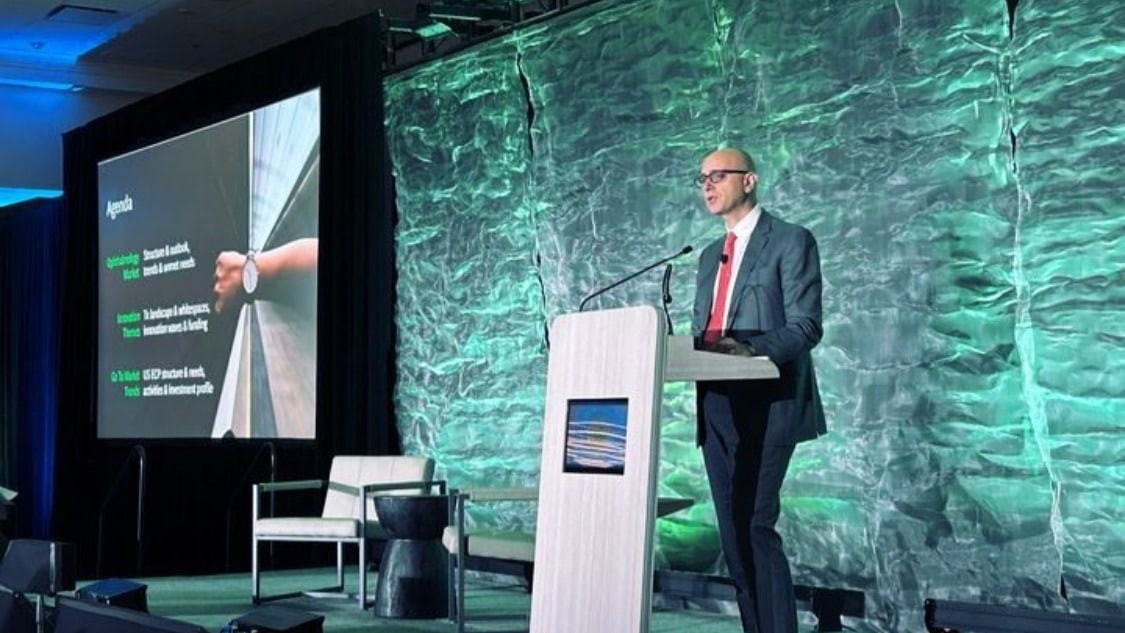
Graduated in Aerospace Engineering at Politecnico di Torino and with an MBA from SDA Bocconi, Sergio Rossi has built an international career in strategic consulting and healthcare.
In his professional experience, what was the moment that marked a real breakthrough in his path and made her change perspective on counselling work? I would say that the moment that really changed the trajectory of my career was when I stopped thinking only about “resolving problems” and started building deep trust relationships with customers and teams. Relationship and trust are what really allows you to make a qualitative leap. Counselling is a technical profession, but it grows exponentially when you understand that your credibility arises from the combination of rigorous analysis and authentic human impact.
From this experience the idea of bringing some tools typical of strategic counselling in the paths for transversal competences and the Orientation. How was this project born concretely? The idea was born from a simple question: how can we give more options to boys for their future? At 18 years, opportunities are not always obvious or readable. The methods we use every day, such as structured thinking, teamwork and the ability to deal with complex problems, are skills that would be very useful to start training already during the school journey. I realized that the project could really make a difference from the first day. After about half an hour of exercise, a group of students began to propose solutions that they would not disfigure in a junior consulting team. I was particularly impressed by the level of attention and participation, very high despite today the boys are often more exposed to the speed of social media than analytical and reflective forms of thought.
We often talk about “thinking as a consultant”. If you were to identify one competence to pass on to students, what would you choose? I would say the ability to simplify complexity. It does not mean trivializing, but learning to distinguish what matters from what is only background noise, building a clear, orderly and progressive reasoning. When I was their age, I would have liked someone to explain to me two very simple things: that there is no problem too big if you know how to break it, and that clarity of thought is not a natural talent but a competence that trains over time.
In recent years, a lot of emphasis has been placed on the value of so-called transversal skills. Why have they become so central today, even in a highly technical field such as advice? The world of strategic consultancy changes continuously: new markets, new technologies, new business models. In this context, technical skills remain important, but are often transferable and learn relatively quickly. Transversal skills make the difference because they allow you to deal with issues never seen before, work in multidisciplinary teams and transform an idea into a real impact thanks to communication and trust. Basically, I am what makes a consultant not only good, but really useful and, in many cases, indispensable.
Is there a professional episode that you think tells the value of problem solving and teamwork? I remember a particularly complex project in the life science sector in Turkey, with many parties involved, a strong political sensitivity and very tight timing. In that case the numbers were fundamental, but not enough. What allowed the project to be unlocked was a joint work session in which consultants, pharmaceutical companies, government and patient associations managed to build a common vision, focusing not only economic profit but also quality of life. It is an example that I often bring to the boys: complexity faces together, not individually.
What makes this project PCTO different from other traditional orientation paths? Innovation is not so much in the formula, as in really putting students at the centre as protagonists and not as simple spectators. They do not just listen to theoretical content, but analyze, collaborate, discuss and build solutions. For many it is the first opportunity in which young adults are treated with real problems. I hope that in five or ten years they remember above all two things: the feeling of being able to face new challenges and the idea that working together, listening and enhancing the contribution of others, can bring much further than you imagine.
For those who look with interest this type of professional path, what advice do you feel to give to young people today? I’d say three things. The first is to cultivate curiosity: never stop asking questions, explore and try to understand how the world works. The second is to learn to communicate clearly and frankly, because it is the superpower that allows ideas to become reality within a climate of trust. The third is to surround itself with better people. Growing professionally also means growing as people, and this happens especially when confronting people who stimulate, challenge and help improve. The career is not a linear race, but a succession of choices in which courage, curiosity and responsibility make the difference.
The article Sergio Rossi: “The true leap of quality comes from trust” comes from IlNewyorkese.