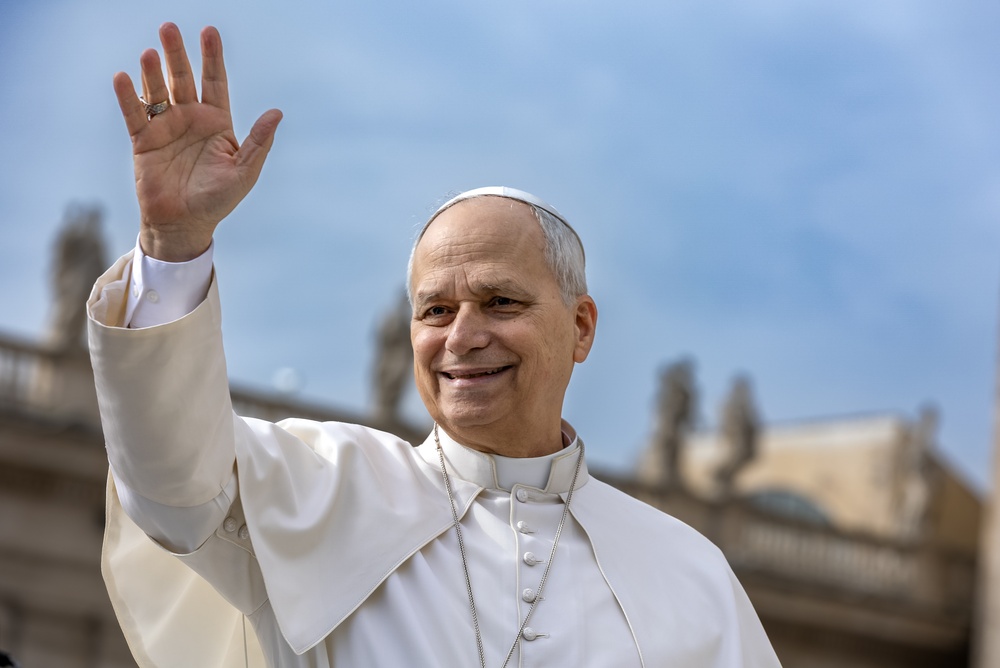
Saturday 20 June Pope Leo XIV will visit Pavia and Sant’Angelo Lodigiano, in Lombardy. The most anticipated part of the day will be in the town of Lodigiana where Francesca Saverio Cabrini was born, the Italian religious who died in Chicago in 1917 and canonized in 1946 by Pius XII. In the official program of the visit there is a stop in the parish of Santi Antonio Abate and Francesca Cabrini, where the Pope will venerate the relic of the heart of the saint. It is a short passage, placed at the end of a day started in Pavia, but the chosen place says a lot about how Leo XIV is building the first months of his pontificate.
Cabrini and Leo XIV are often told through the United States. She was the first American citizen canonized by the Catholic Church. He is the first Pope born in the United States, in Chicago, the same city in which Cabrini died after almost thirty years of work between migrants, poor, sick and orphans. Reading so, the visit might seem like a small celebration of American Catholicism: an American Pope who goes to the birthplace of the first American saint. The story, however, is less simple and more interesting, because both have become “American” through different borders, languages and communities, without reducing their identity to a single flag.
Francesca Cabrini was born in 1850 in Sant’Angelo Lodigiano, when that part of Lombardy still belonged to the Lombardo-Veneto Kingdom. As a young man he wanted to be a missionary for China, following the Catholic imagination of the great nineteenth century missions. Things went differently. In 1889, on indication of Leo XIII, he arrived in New York with some sisters to take care of the Italians emigrated to the United States. They were years when millions of people left Europe to look for work and possibilities elsewhere, often ending up in overcrowded neighborhoods, with little money, little health care and a very fragile social position.
Cabrini moved into that world with a remarkable pragmatism. He founded the Missionaries of the Sacred Heart of Jesus and, during his life, made dozens of ocean crossings. He opened schools, hospitals and orphanages in the United States, Europe and Latin America. The sources of his congregation speak of 23 Atlantic crossings and 67 institutions founded between schools, hospitals and orphanages. His work started from the Italian emigrants, who in the United States were often poor and discriminated, but soon became involved in other communities. His holiness, even before a devotional question, was built on a very concrete network of buildings, travels, fundraiser, permits, personnel to form and people to assist.
When Cabrini was canonized in 1946, his figure in the United States was mainly told as a national success. It was an American citizen, naturalized in 1909, and this allowed American Catholics to present it as evidence of the country’s religious maturity. It was an understandable reading, also because it arrived immediately after World War II, at a time when the United States was recounting as a winning and indispensable power. But Cabrini doesn’t really fit into an American story. His life began in a Lombard country, passed from Rome, New York, Chicago, Buenos Aires and many other cities, and was marked by the condition of who leaves and has to rebuild a life elsewhere.
Leo XIV also has a less national biography than the formula “American Pope”. Robert Francis Prevost was born in Chicago in 1955, he is Augustinian, studied and worked long in Rome and spent many years in Peru. In 2015 he obtained Peruvian citizenship and in the same year he was appointed bishop of Chiclayo, a position maintained until 2023, when Pope Francis called him to Rome as prefect of the Dicastery for Bishops. His election broke an old Vatican hesitation towards the idea of an American Pope, but he did so precisely because Prevost was not only perceived as a man of the American Church. He was a religious with a Roman formation, a long pastoral work in Latin America and a central role in the choice of bishops in the world.
This is why the visit to Cabrini talks about migration. In recent months Leo XIV has insisted on this issue several times, and on 4 July will be in Lampedusa, the Italian island became one of the places symbol of arrivals by sea to Europe. The date is inevitably full of meaning: while the United States will celebrate the anniversary of independence, the first Pope born in the United States will be on an island associated with shipwrecks, rescues, reception centers and European policies on borders. It is a choice that makes it difficult to use its nationality as a simple reason for patriotic pride, especially at a time when the Trump administration brought a very hard line to the centre of American politics on deportations and immigration control.
Saint Angel Lodigiano, then, will not only be the birthplace of a famous saint. It will be the point from which to reread two Catholic biographies crossed by the movements. Cabrini left Lombardy and found in the Italian emigrants the center of his work. Leo XIV left the United States and built a decisive part of his ecclesial identity in Peru. In both cases, American membership exists, but it is not enough to explain history. The clearest lesson of the visit is this: some figures become important precisely because they are not stuck in a single border. Cabrini wrote that the world was too small to limit itself to one point. Leo XIV, going to her and then to Lampedusa, seems to want to leave from there.
L’articolo The journey of Leo XIV in the country of Mother Cabrini proviene da IlNewyorkese.