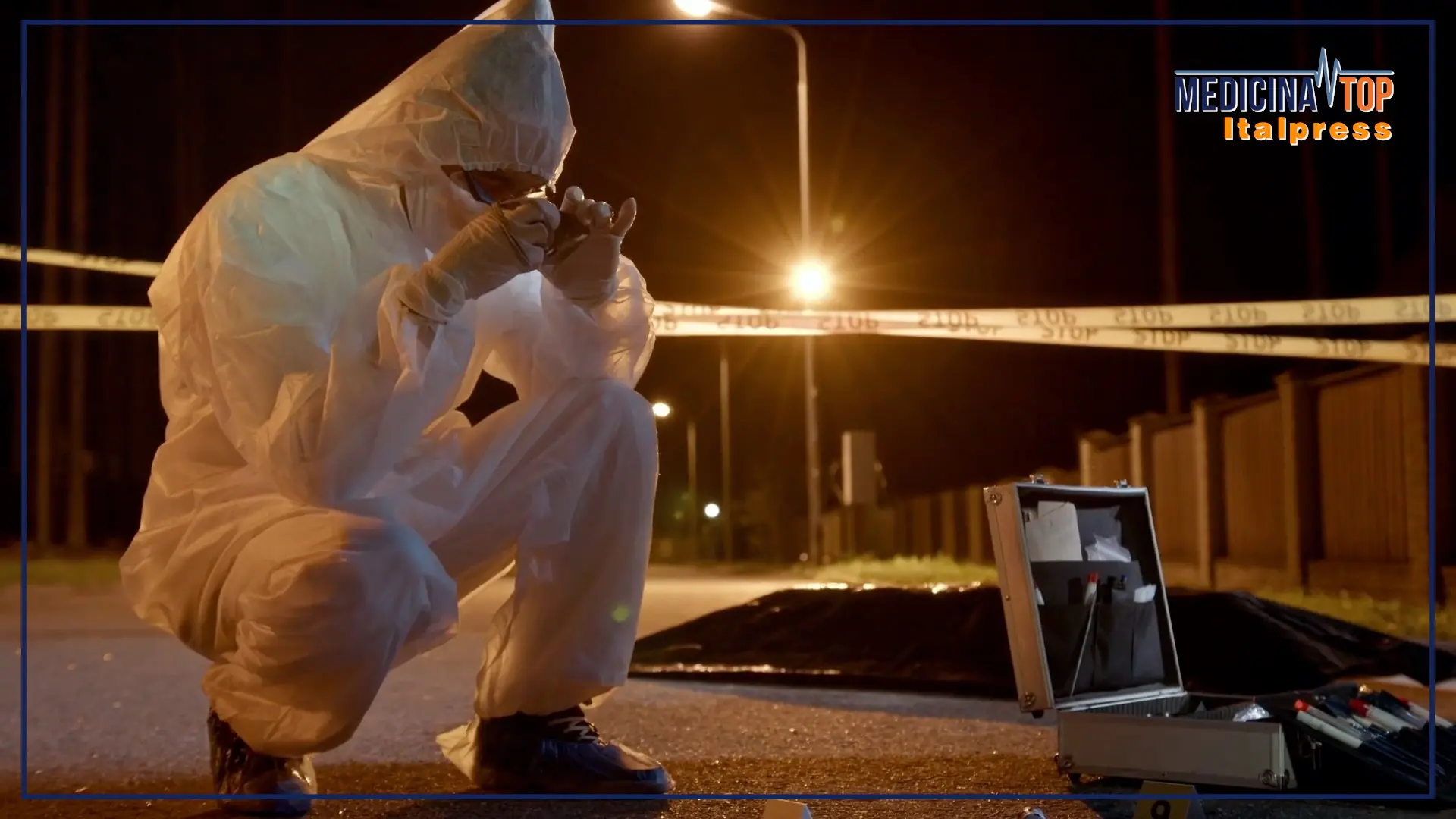
NAPOLI (ITALPRESS) – Legal medicine is the branch of medicine that operates in connection with the judicial, civil or criminal sphere. From autopsies to periciousness, in cases of murder, accident, violence and malasanity, the coroner provides scientific elements useful to reconstruct the dynamics, times and methods of a fact: an increasingly important role, thanks to the developments of forensic genetics, toxicology and investigative techniques.
“If autopsies are absolutely decisive, because the medical examiner is the person who first seriously analyzes the body and the site of the crime: there are a series of episodes in our legal history that tell us that the medical examiner is a bit superficial or not notice certain elements,” said Pasquale Bacco, technical advisor and medical lawyer, interviewed by Marco Klinger for Top Medicine, TV format of the Italpress press agency.
Among the obligations of his profession, he emphasizes, there is that of “do not neglect anything, whether it is a fragment of Dna, a hair or a footprint: we have important cases, such as Garlasco, in which the coroner distracts, the body is turned and deletes the footprints; this tells us that the coroner is certainly a fundamental element in addressing the investigations, in both positive and negative sense. The biggest problem that legal doctors have is unfortunately the means: sometimes we find ourselves making inspections in almost inhuman conditions. The greatest mistake is certainly superficiality or approximation: the legal practitioner knows what its means are, so he must approach the case in the most serene way possible. What often spoils investigations and creates remote damage is excessive lightness in bringing other people closer to the body: the legal practitioner has the right to prevent this from happening.”.
Equally important is the management of the emotional dimension: “At first it was a big problem for me, just think that my first autopsy was on a 5-year-old child who died in a road accident: in that case I was even attacked by the mother, but we doctors must also be able to attenuate absolutely dramatic news. Today I can’t get dragged: to do your job well, the coroner must still create a detachment. Among the cases that most have marked me is that of a colleague to whom I had to do autopsy: he was very young and for 15 years he struggled with cancer, seemed to have left and instead life kept this very sad thing; it was the only time I embraced a corpse. Even when you are facing children’s corpses it is much more complex to work: you have to manage a series of evaluations and the thought goes also on family and children. We are not made of stone, for us are complicated moments: in my work the easiest thing is to die, so either you can manage it emotionally or life becomes a continuous concern.”.
– photos taken from video Medicine Top –
(ITALPRESS).