War is no longer only fought in occupied territories or in devastated cities. Today it also takes place in the screens that we see every day, inside the social feeds, immersed in that continuous sequence of content that fills our attention. It is a radical transformation: conflict becomes narrative material, tragedy is reduced to clips, pain turns into entertainment.
Yet, precisely in this new fragmented and very fast landscape, telling what happens becomes a moral and civil act. A duty for journalists, scholars, institutions and digital citizens. The war in the age of artificial intelligence is not only fought with weapons and drones, but also – and above all – with altered images, distorted reconstructions and automated lies.
In recent years we have witnessed a profound change in the representation of hostilities. The battles are no longer documented: they are mounted, sounded, packaged. They become viral. They become consumables, and in this spectacularization is reflected a policy that adopts the codes of the platforms, leading to even transform death into storytelling.
Soldati ucraini si esercitano prima di un attacco alle postazioni russe nel 2023 | via Shutterstock
Even more significant is the involvement of influencers in the communication strategy. During the Gaza conflict, several creators were used by governments to promote their own version of the crisis. Selfie next to humanitarian aid, clips built with an Instagram aesthetic, smiled next to suffering. Propaganda becomes glamour.
The pain of others is transformed into a narrative element to be shared to direct public opinion. It is the most evident effect of a society that, as Zygmunt Bauman recalled, lives in a permanent state of “liquidity”, where everything – even tragedy – can be shaped, reduced, spectacularized.
But the decisive step, what we must understand, is the role of fake news as attack tools. In the Russian-Ukrainian conflict, disinformation has become a parallel front, made of false content, manipulated reconstructions, “returned” news to confirm pre-existing beliefs. It is the logic of the prejudice of confirmation: we believe only to what comforts what we already think. Thus lies appear plausible, while doubt – a fundamental instrument of democracy – is perceived as a threat.
And here comes the most disturbing element, what I consider central: fake news generated by the machines.
In March 2026, as reported by “Wired”, the Grok chatbot – the system developed by Elon Musk – was called to verify a video showing alleged Iranian missiles on Tel Aviv. Not only did it wrong: it confused places, dates and context, but above all created a false image to confirm its own interpretation.
We are no longer in front of simple manipulation: we entered the age of automated lie. When it is an algorithm to generate falsehood, falsehood multiplies without difficulty. There’s no need for a strategy anymore. It’s an epochal leap.
The information expert Tal Hagin summarized this threat with words that should make us reflect: “The longer we stay without rules on AI abuse, the greater the damage. The spread of fake news based on artificial intelligence is likely to push us beyond a world based on facts.”.
If we lose encouragement to facts, we lose reality. And if we lose reality, the public debate becomes theater, democracy empties and war becomes pure script. A script without brakes.
That is why today more than ever, a new ethics of gaze is needed. It is not enough to tell: you have to check, decipher, contextualize. It is necessary to form citizens capable of reading complexity, not to suffer speed. Education, which I have been working for years, is no longer a cultural project: it is a democratic urgency.
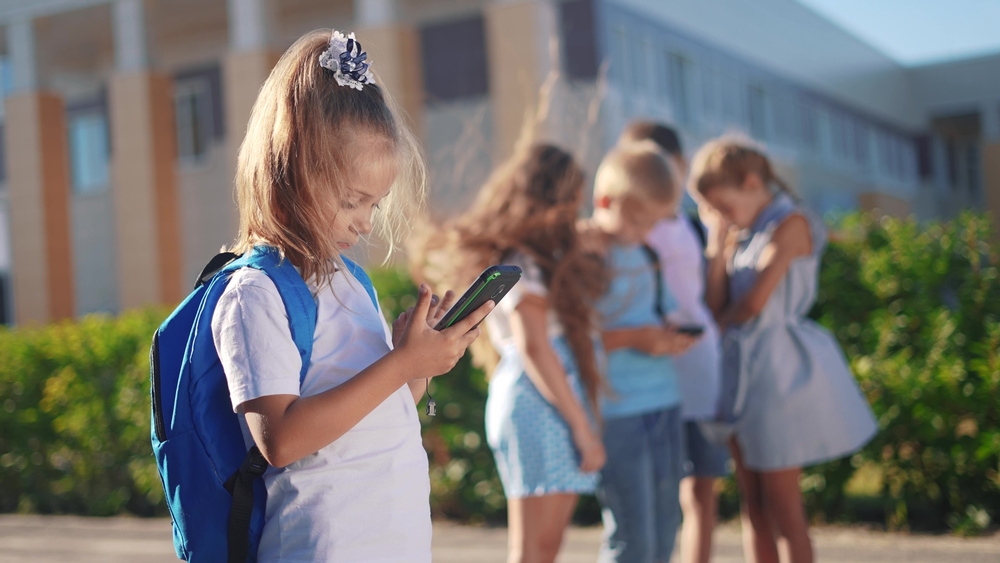
We are faced with wars that flow in smartphones, which feed on algorithms, which build up synthetic emotions and overturned truths. But we’re not meant to suffer them. We can choose to educate the critical spirit, to teach to verify the sources, to report ethics to the center of public speech. Technology can hurt, but it can also illuminate. It can create confusion, but it can also build awareness. It depends on us. Hope is a responsibility. And it comes from here: from the courage to choose the truth, even when it is uncomfortable; from the desire to understand, instead of simplifying; from the ability to watch the war not as a content to flow, but as a tragedy that concerns us all.
L’articolo The screen rewriting war proviene da IlNewyorkese.