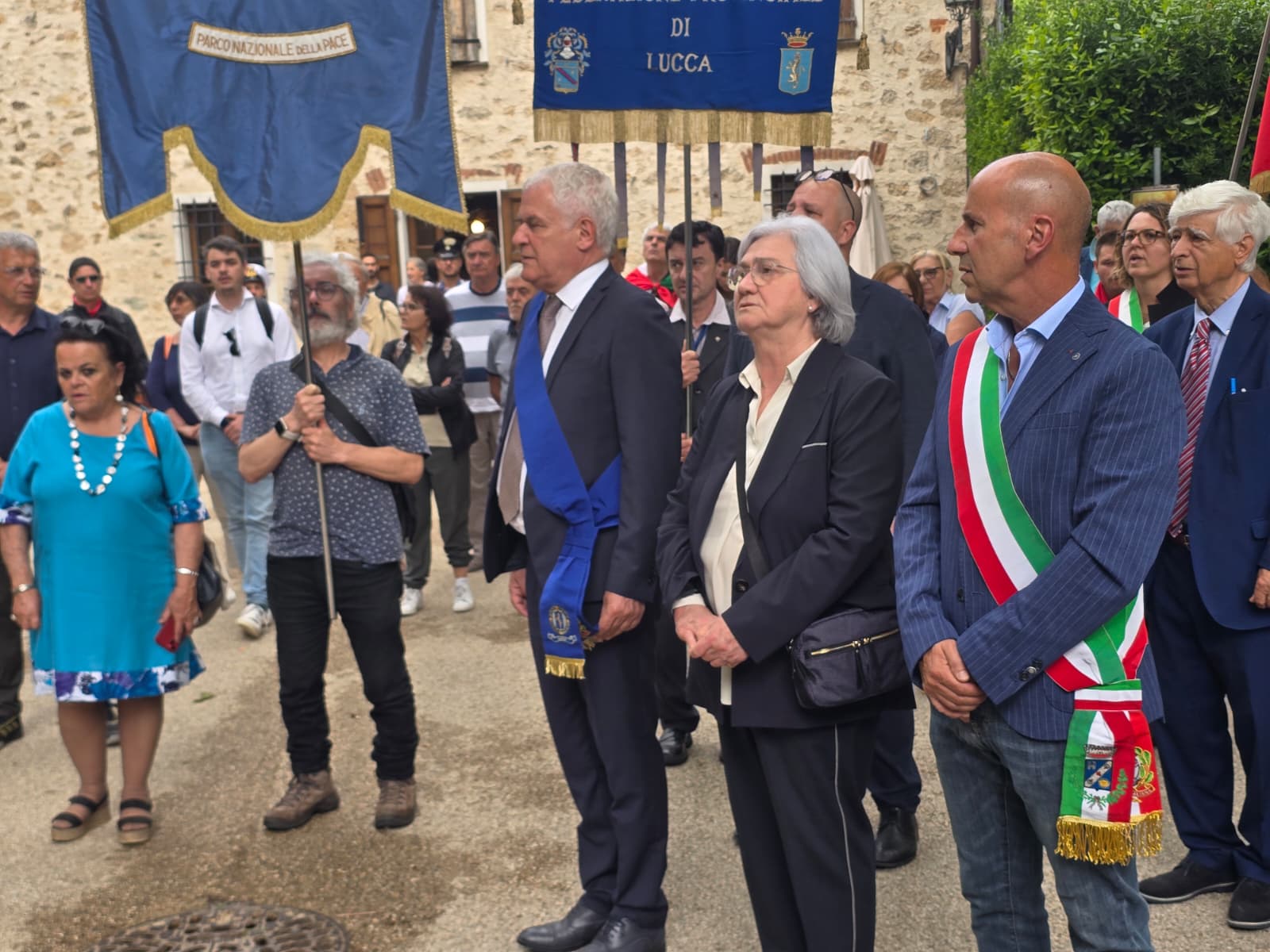
STAZZEMA (ITALPRESS) – In the National Park of Peace of Sant’Anna di Stazzema, the birth of the Italian Republic was celebrated on its eighteenth anniversary with the intervention of Rosy Bindi, who recalled achievements and transformations on the path of women’s rights. A path that Bindi, recalling the words of Tina Anselmi, defined as “a slow, tiring and still impeded revolution, but irreversible”.
Before her, in the Balducci Hall of the Historical Museum of the Resistance of Sant’Anna, after the deposition of the crown of laurel in the square of the church, took word the mayor of Stazzema Maurizio Verona and the president of the Association Martiri Umberto Mancini. Among the present also the survivors Adele and Syria Pardini, sisters of Anna the youngest victim of the massacre of Sant’Anna.
“This is certainly one of the most significant places to remember the Republic – he debuted Rosy Bindi –. We are here thanks to the commitment and sacrifice of many. Remembering this day means looking to the future. In these eighty years we have crossed together lights and shadows, including errors and wounds suffered. But that light helps us to interpret a time that many of us did not believe they had to live again. The referendum on 2 June 1946 saw an extraordinary participation: it was not a minority choice. Behind them were twenty years of fascism and years when universal suffrage did not exist. Yet people participated in mass, because they wanted to make their contribution to the country. 54.3% chose the Republic, 45.7% of the Monarchy. It was not taken as far as the result was clear. Bobbio explained it well: the referendum was chosen because the people are the roots of democracy and the Republic.”.
“The right of vote was the first step, but the path of women was (and is still) the slowest and most winding revolution in history – Bindi continued. No right is conquered once and for all: it is true for all, and especially for us women”. “The Republic recognizes the inviolable rights of the person and is at their service, removing obstacles that effectively prevent participation in democratic life. The Republic is us, as individuals, as families, as parties, as unions, as realities that aggregate to pursue the general interest. This is the Republic: the house of all Italians, of those who built it and laid the foundations, born from the Resistance and the Second World War, drawn in the Constitution. A house that can open the doors and enrich the communities we are part of.”.
The mayor Maurizio Verona instead spoke of “an important event. Because if we live in a democratic republic today it is thanks to those who fought to give us democracy and freedom. Young people who have made a courageous choice, to allow us to go to the polls. That is why those who desert the urns today do not make respect to those who have struggled and sacrificed their lives to obtain this right. I am particularly impressed to see women refrain from voting. For eighty years, women have been able to exercise this right, and in Italy the female contribution has been an extraordinary positive contribution to the democratic life of the country. It was in the writing of the Constitution, which is not given to us forever and must be defended every day. From time to time someone tries to undermine their basics, as we have also seen in the recent referendum: an attempt to force that we cannot ignore.”.
Umberto Mancini, president of the Martiri Association of Sant’Anna, instead stressed that that that of the Republic was a “wonderful speech: only in Italy the Nazi massacres caused over 4,500 civilian victims in about 280 episodes, including Sant’Anna di Stazzema with its 560 victims, in vast majority elderly and children. If today we can enjoy eighty years of freedom and democracy, it is thanks to the sacrifice of those who lost their lives to conquer it. In Sant’Anna women were the majority of the victims, 258, and three of them received the gold medal for civil merit for acts of heroism: Genny Marsili Bibolotti, Milena Bernabò and Cesira Pardini. To remind them, we are working on the construction of a statue of the artist Anna Multone of the Accademia di Carrara”.
-Photos press office Sant’Anna di Stazzema-
(ITALPRESS).