ROMA (ITALPRESS) – There are many people who spend hours in front of the screens and arrive in the evening with tired eyes, headaches and difficulty of concentration. There are children who struggle to read without knowing they have a visual disorder. And there are elderly people who, due to poor vision, risk isolation, loss of autonomy, cognitive disorders and even falls. “In the world, at least 2.2 billion people have a visual deficit close or far. For at least 1 billion of them, the visual deficit could have been prevented or yet to be faced.” This is the comment of Lucia Intruglio, President of the National Commission of the Orthoticists of the FNO TSRM and PSTRP, who, on the occasion of the World Orthoptic Day, draws attention to the value of visual prevention and the fundamental contribution of the Orthoticists in the daily life of people, from childhood to the third age.
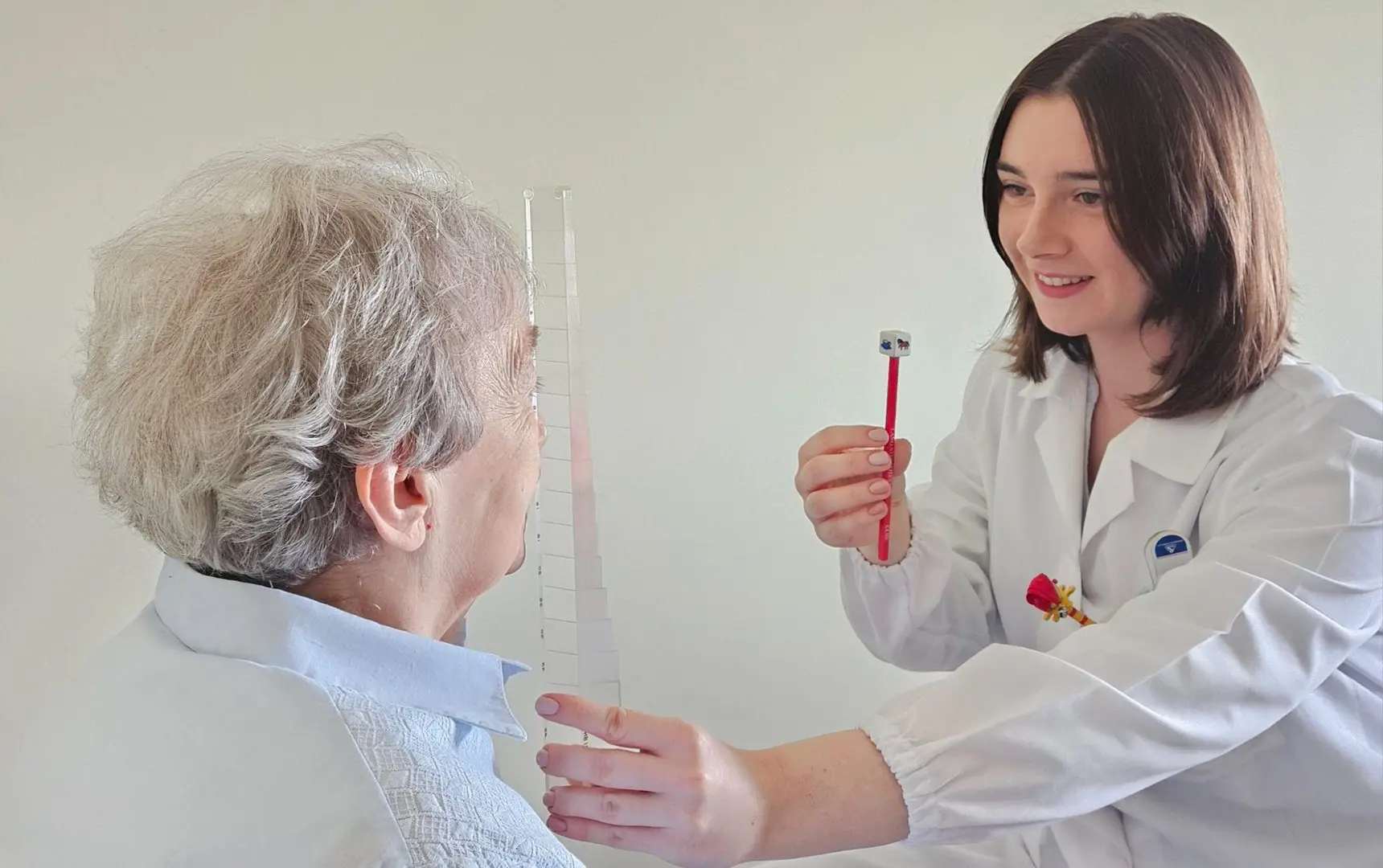
Being “in visual health” does not only mean “seeing well” or having “10/10′′′′. Having a good vision is reflected on the quality of people’s lives. This is where the Ortottista, a health professional who promotes education to visual health, comes into play. “The Orthoticist is the healthcare professional who deals with the prevention, evaluation and rehabilitation of visual disorders that prevent binocularity, but especially accompanies the person at times when the view affects his autonomy and his well-being,” explains Intruglio. “Today, more than ever, we have to help citizens and institutions understand that visual health is not only a specialist theme: it is a social, educational and public health issue.”.
The Orthopticist intervenes in functional diagnosis and rehabilitation of problems such as strabism, ambliopia, convergence disorders, visual fatigue and alterations of eye motility. Activities that accompany the person throughout the course of life: from pediatric screenings to rehabilitation paths for people who pour in conditions of fragility and elderly. And the evolutionary age is today one of the most delicate fronts.
According to the Higher Institute of Health in Italy, 22.1% of children between 2 and 5 months spend time in front of TV monitors, computers, tablets or mobile phones. A phenomenon that varies from one side to another of the country between 13.6% in the province of Trento and 30.3% in Sicily and Puglia.
Most of the children on display spend less than an hour a day in front of a screen, but a share ranging from 1.9% of Veneto to 9.1% of Calabria. Difficulty of focus, eye fatigue, headaches, convergence disorders and decreased attention are the main consequences of these behaviors. For this reason, the World Health Organization (WHO) recommends that children under 2 years of age do not spend time in front of the screens and that children between 2 and 4 years do not spend more than an hour a day.
“Prevention is the true key,” says Intruglio. “Premously intercepting a visual problem means avoiding consequences that can affect learning, sociality, autonomy and safety of people.”.
However, the theme of poor vision also concerns the elderly population. The incorrect visual deficits can increase the risk of falls, fragility and cognitive decay. Not by chance, the new National Plan of Prevention 2026-2031 also draws attention to visual disorders related to dementia and the need to strengthen actions of health education and prevention.
The data of the Higher Health Institute show that about 30% of the over 65 falls at least once a year and this percentage rises at 50% after 80 years. “The falls – incalza Intruglio – are the first cause of hospital access for the elderly and represent a huge health and social cost.”.
A percentage of these falls, according to the Ortotists, is due to visual difficulties, such as the reduction of perception of depth, the poor visibility in the dark and the difficulty in distinguishing obstacles. Bad vision has an impact on reading, walking and moving in different environments.
On the World Orthoptic Day, the Italian Orthopticists recall how important it is not to wait for a visual problem to become evident, and invite you to take care of your sight with periodic controls.
“Protecting sight – affirmed by the national albo Commission – means protecting much more than eyes.” It is an appeal addressed in particular to children and the elderly: “Because seeing evil doesn’t just mean seeing worse: it means studying with more effort, working with more difficulty, moving with less security and, in the long run, losing autonomy.”.
-Photos FNO TSRM and PSTRP-
(ITALPRESS).