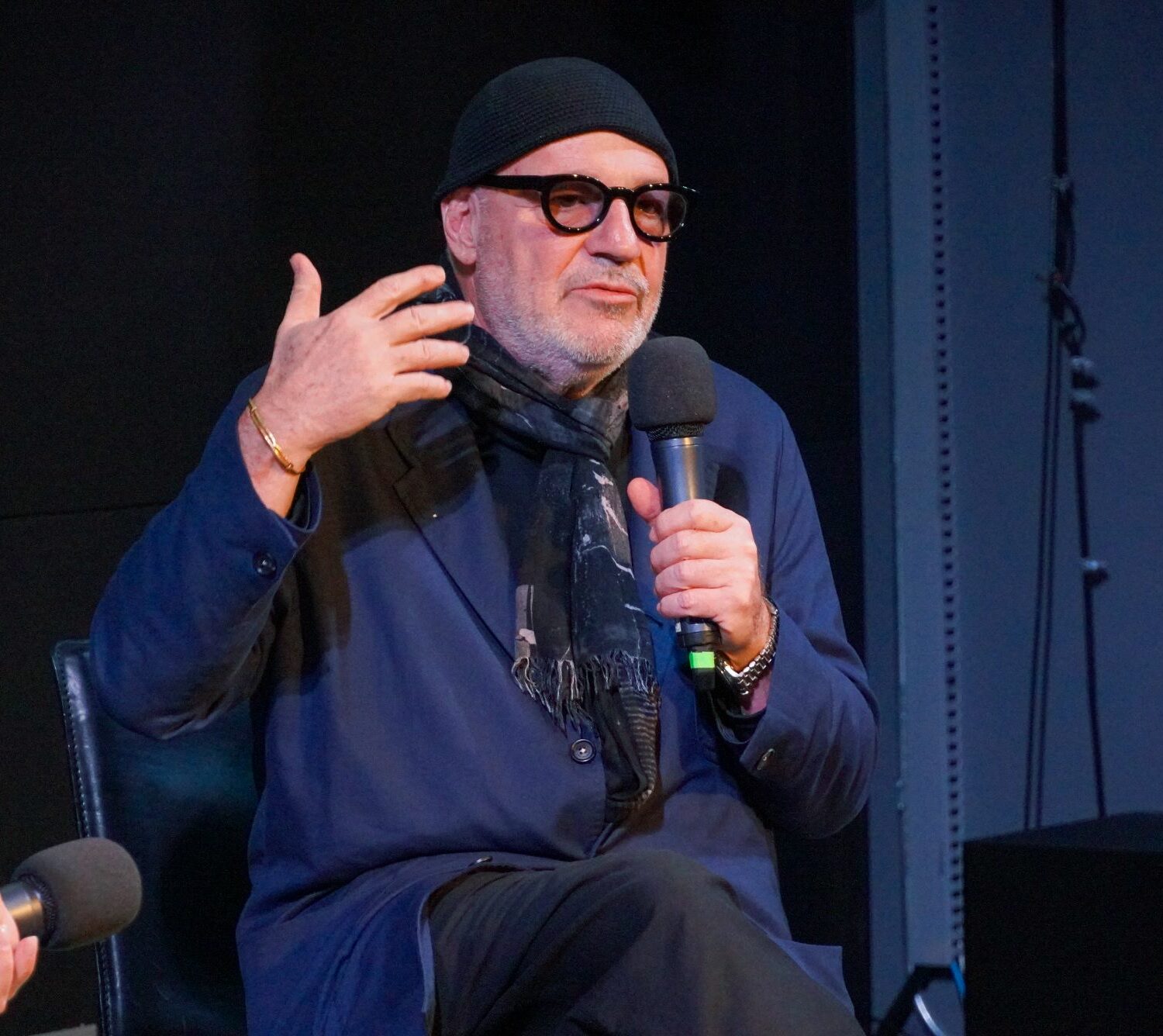
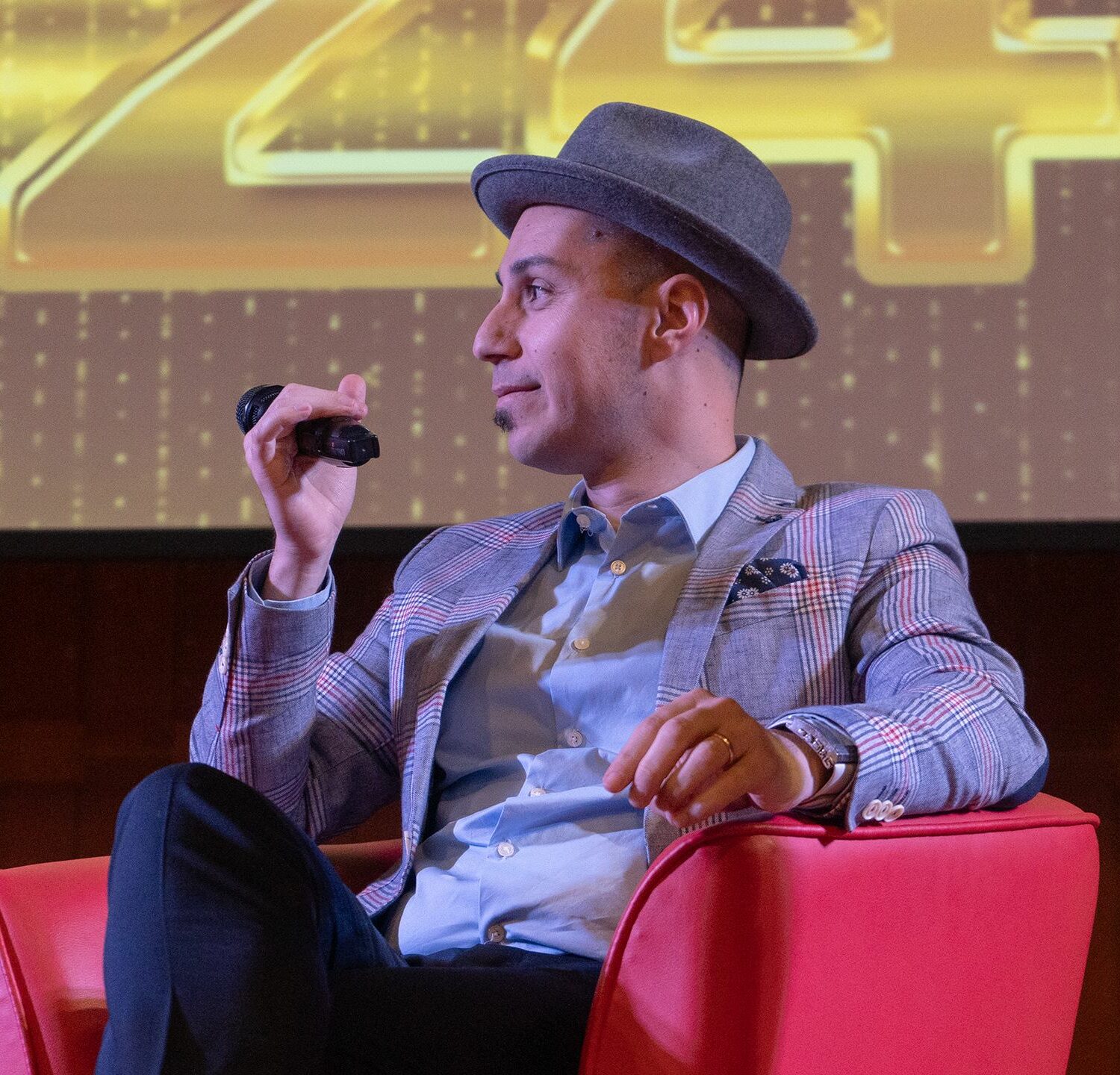
Davide Fiore is an Italian director and video editor who lives and works in Los Angeles. Born in Turin, in the last eighteen years he has built an international route between documentaries, short films, advertisements and video clips. Among his last works is A Little Fellow: The Legacy of A.P. Giannini, a documentary directed by him and a product that has received many international awards.
What prompted her to tell today the story of A.P. Giannini?
When I arrived in San Francisco in 2017 I didn’t know his story at all. Walking through the city I saw a plaque reminiscent of the Bank of America, born as Bank of Italy and founded by an Italian American. I started looking for information in the library, and I realized there was practically nothing in the form of a documentary. It was an incredible story, almost forgotten, known only by older people or handed down orally. I was looking for a project to enter Californian cinema and this seemed to me the right story: human, simple and at the same time huge. And then there was the theme of immigration, which was personal to me, having just arrived in the United States.
In the film emerges an idea of “human” finance, based on trust and handshake. How hard is it to tell this model today?
Very difficult. Even during the work on the film we had more than one block. The model of Giannini is that of a democratic, capitalist but inclusive bank, which leaves no one behind. Today capitalism tends instead to reward few and to download costs on others. He shows the opposite: one can grow and grow a whole community together. And then there is the question of trust, the handshake. Today is almost impossible, if not in very rare contexts. And that says a lot about how far his model is from the present.
Giannini is described as “People’s banker” and innovator near Hollywood and Silicon Valley ante litteram. How did you keep these two souls together in the documentary?
Joe Mancini was fundamental to this. He helped me keep the story anchored in American history, which I had not studied in detail. Giannini emerges as a figure almost from “Forrest Gump”: he is present next to key moments in the history of the United States. We have worked a lot in the archives to verify every passage, because many things seem legend. But they were real.
The film also tells the relationship between Italian immigration and American economic identity. How do you talk to Italian Americans today?
He speaks directly, although often unaware. Giannini has influenced the lives of many people, even just making possible everyday things like having access to a bank or a loan. And during the projections, I often wondered that the public did not ask questions, but told personal stories related to him. It’s like this memory has remained underground and continues to re-emerge.
Is there an aspect of Giannini that surprised him more than others?
His invisibleness. She didn’t like to appear. In the archive materials it is almost always at the edge of the frame, never at the center. Even when you notice the presence of the room tends to escape. It is surprising, because we are talking about one of the greatest American bankers. And then the fact that many things dedicated to him came after death: he did not seek personal recognition.
How did you work with Joe Mancini to find a coherent voice between historical rigour and narrative rhythm?
Joe Mancini brought historical rigour and continuity. I came from a more narrative and personal perspective. We built the film starting almost backwards: first an embryonic assembly, then the questions to answer, finally interviews and sources. It was a non-linear process, but it allowed us to maintain a balance between precision and account.
The documentary is presented in an exhibition space, Casa Zerilli-Marimò, dedicated to the “revolution” of Giannini. How important is the dialogue between cinema and exhibition context?
It is fundamental. The film itself ends, it lasts an hour and a half. An exhibition instead allows you to rest on things, deepen, see documents and photographs. The idea that the film dialogues with a space dedicated to Giannini gives continuity to the story and returns the complexity of his figure. It’s not just vision, it’s experience.
L’articolo Davide Fiore: «A.P. Giannini, the banker who crosses American history» proviene da IlNewyorkese.