A few days ago a conversation with a colleague made me reflect more than expected. I told him to show his client a new exclusive: a very bright apartment, park view, two rooms, a nice bathroom, last floor, at $570.000 – a price that, for Manhattan standards, is definitely worth a visit.
The answer came in seconds: “The buyer has already excluded that area. He says he doesn’t feel quiet.” This phrase stopped in my head. And there I’ve been thinking about how often, in the New York real estate market, people make important decisions based on generic perceptions, past reputations or phrases heard by others without ever really experiencing a particular road.
One of the questions I hear most often from home seekers is: “But is this area safe? » That’s an understandable question. But it is also a question to which, by law, a real estate agent in New York, and probably in all States, can not respond subjectively. The regulations on ‘fair housing’ do not allow to give personal opinions on issues such as safety, just to prevent certain claims from affecting housing choices in an improper way.
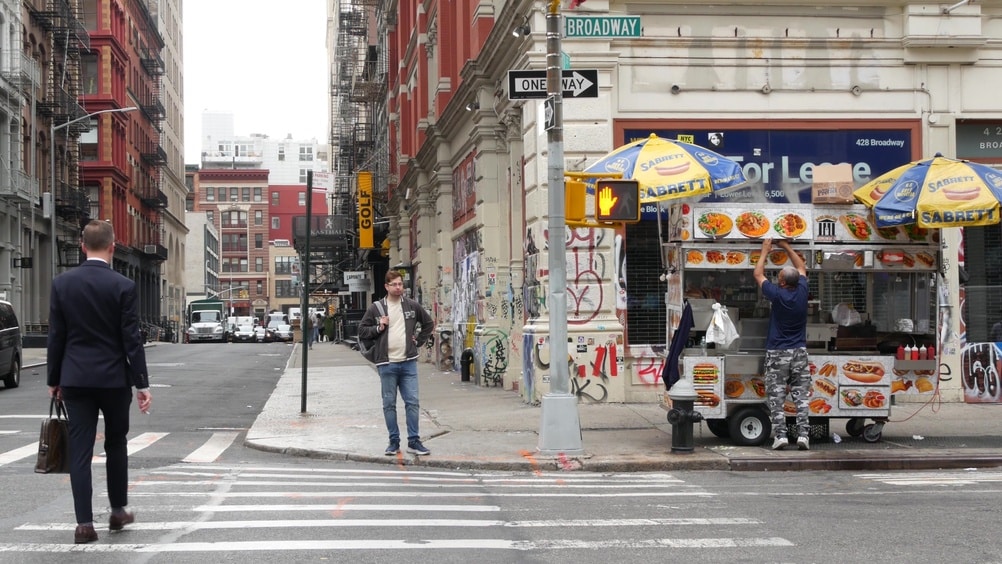
What we can do, instead, is to direct buyers to objective data, such as public statistics of the New York City Police Department, which from information on Crime Statistics in the various Boroughs of the city. But the numbers, alone tell little why the real answer to that question is not found on a website. In New York you just cross a crossroads because the character of a road changes completely. It is not metaphor: it is the physical reality of this city. What varies from one block to another is not only architecture, it is something subtler and more important: it can change the energy of the road, the type of people who live it, the care of the buildings, the evening lighting.
There are blocks full of life, with cafes, restaurants, continuous movement. Other quieter, residential, almost hidden as Tribeca Downtown or East end Avenue or West End Avenue Uptown. There are well maintained buildings, with curated entrances, concierges, management present. And this immediately changes the perception of those who visit. Also the proximity to a park can transform the experience, but counts which entrance, which side, which time. Even the metro changes the personality of a street: comfort, certain, but also more movement, more passage, more noise.
I am often asked by my international clients how to assess a road, as a New Yorker would do, and my most useful advice is also the simplest: “walk for the block, stop a few minutes and look at those who enter and exit the buildings, observe the sidewalks, light, business activities, rhythm. Then come back again, maybe in the evening or during the time when you really imagine to live there».
Who brings the dog to the park? Who’s from the subway? These details tell much more than any label or statistics. So remember who buys reasoning for neighborhoods buys like everyone but who thinks block by block, often buys better!
L’articolo In New York you don’t buy a neighborhood, you buy a block proviene da IlNewyorkese.