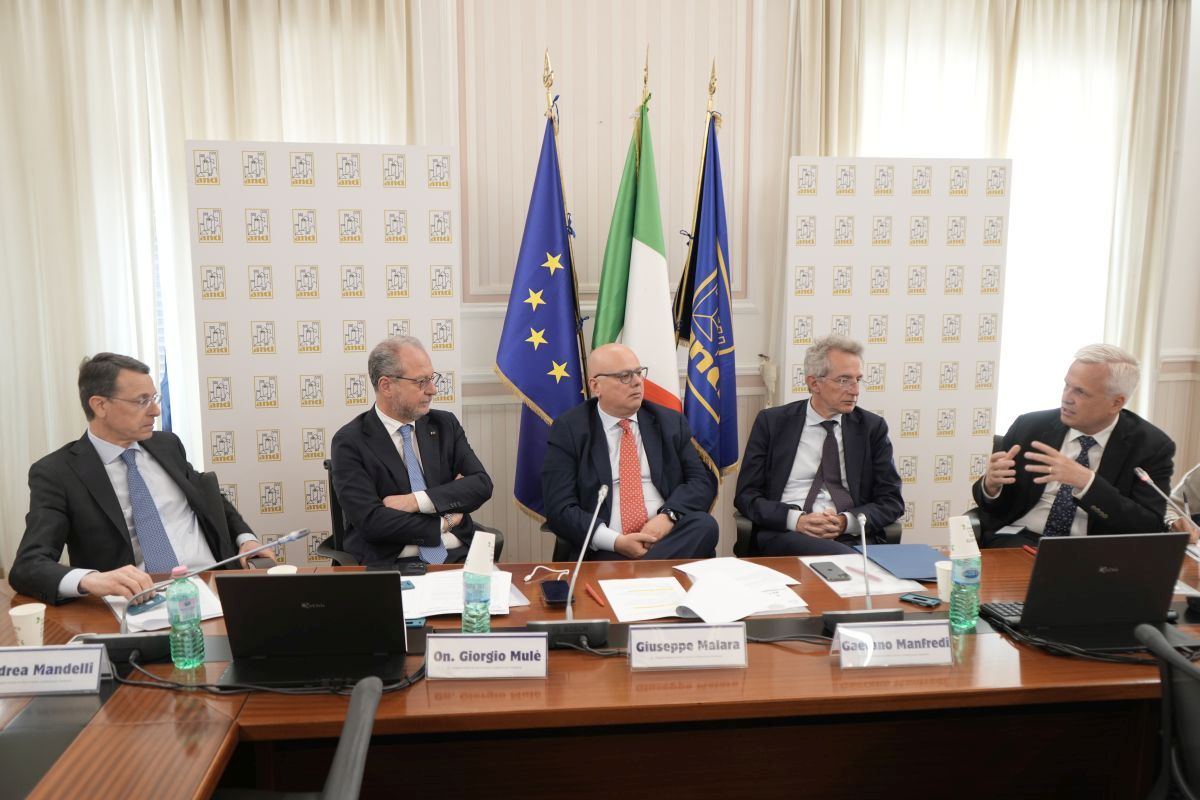
ROMA (ITALPRESS) – A concrete alliance between institutions, territories, health professionals and business to bring the economy circular into health and transform a complex “end of life” into a resource. This is the message at the centre of the press conference promoted on the occasion of the Arth Day, during which Novo Nordisk made the point on the ReMed project and announced in Rome the expansion to new cities, strengthening at national level a model that combines health and environmental sustainability. ReMed is the project that allows the recovery and recycling of pre-filled injectable medical devices for self-administration (such as insulin, GLP1 and Growth Hormone, without needle), with the aim of transforming them into new resources and reducing environmental impact. From disposable “penne” to common objects, such as chairs and furnishing accessories, the path becomes an entirely innovative collection and recycling model, to transform a medical device used by refusal to resource. An initiative that is part of the global strategy of Novo Nordisk “Circular for Zero”, which aims to reduce the environmental impact by 2045 by reducing consumption, recycling waste and redesign of products along the chain “from production to the patient”. A strategy that has been strongly relaunched by the Italian headquarters of the group in a unique and distinctive way that coincides for the first time environmental sustainability and social responsibility. Experienced successfully in seven countries worldwide (including Brazil, France, Denmark and the United Kingdom), “ReMed” after a first experimental phase in Italy, today involves 6 regions (Piemonte, Lombardia, EmiliaRomagna, Lazio, Campania, Puglia), 14 cities (Turin, Cuneo, Novara, Milan, Varese, Bologna, Parma, Rimini, Modena, Ferrara, Imola, Rome, Naples, Bari) and over 680 pharmacies. The project is realized in collaboration with Anci. Lusinghieri also achieved the results: in the pilot phase more than 1.5 tons of devices were collected. The pens are conferred by the citizens in the adhering pharmacies and collected by the territorial partners that give them every four months in storage centers. Novo Nordisk then transfers products to Denmark once a year to complete the recovery cycle and turn them into second raw materials. The disposable pens are now recyclable up to 85%. At the heart of the meeting, a key point: the new challenges of sustainability are met only with a synergy between all actors of the system – institutions, companies, communities – capable of producing concrete and replicable results. In this framework, ReMed has been indicated as an example of how a company can act as a “system partner”, interacting with stakeholders, citizens and communities to accelerate change towards a more fair, just and sustainable future. “The Parliament can and must be a facilitator of sustainability: initiatives such as ReMed show that collaboration between public and private generates concrete value for the environment, health and community,” said Giorgio Mulè, Vice-President of the Chamber of Deputies and promoter of the initiative. “The circular economy applied to health transforms waste into a resource. Now it serves continuity and a framework that accompany scalable projects, because priority remains to improve the quality of the environment and the life of citizens: it is an invitation to act together, because it is not enough alone,” he added. The project, after the pilot start in 2024 in EmiliaRomagna (Bologna, Parma), Piemonte (Turin, Novara) and Lombardy (Varese), enters into a phase of expansion that in 2026 involves some of the main Italian cities – Rome, Milan, Bari, Naples – to which are added Rimini, Modena, Ferrara, Imola and Cuneo, with the aim of getting to a capillary coverage by the end of 2027and our pharmacies, demonstrates that the synergy between local institutions and forward-looking enterprises such as Novo Nordisk is the key to winning the challenges of sustainability,” said Gaetano Manfredi, President Anci and Mayor of Naples. “As mayors, we are committed to making cities innovation laboratories where the care of the person and the care of the environment finally travel hand in hand. The accession of Naples to the ReMed project is not only an environmental choice, but an act of responsibility towards the health of our citizens and the future of our territory”. A decisive role is given to pharmacists and pharmacists, a point of daily contact between health and citizens. “The pharmacists are more and more protagonists of sustainability because they guard proximity and accompany citizens towards virtuous behaviour,” said Andrea Mandelli, President of the Federation of Orders of Italian Pharmacists (FOFI). “Promoting responsible device management means taking concrete action on health and the environment. The participation of pharmacists in the project contributes to a widespread diffusion of the culture of sustainability, which starts from daily gestures and involves the whole community.” The initiative, finally, has relaunched a method message: sustainability requires a structured dialogue between the public and the private sector and a framework in which policies and regulations make it easier to scale the models that work, enhancing the ability of communities to “ team up” for environmental and social objectives and helping to counter the effects of chronic pathologies on patients and territories. “Health and environment are closely connected: many chronic diseases, such as diabetes, are influenced by factors that go beyond the health system,” said Jens Pii Olesen, General Manager of Novo Nordisk Italia. “To take care of people also means reducing the environmental impact of care. In Novo Nordisk this commitment translates into therapeutic innovation and concrete actions such as ReMed, a project that applies the circular economy to health and that today, on the occasion of the Arth Day, we launch at national level. ReMed is part of our global Circular for Zero strategy and comes from collaboration with institutions, territories, health professionals and patients: only through shared action can we build a more sustainable future for the health of people and the planet.” -photo press office Novo Nordisk –(ITALPRESS).