ROMA (ITALPRESS) – Italy has allocated for the first time structural resources dedicated to prevention and vaccines in the Law of Budget 2026. Now the challenge is to transform this investment into real and fair access across the territory, especially for the adult and fragile population. A crucial step in a country where almost one out of four is over 65 years old and the increase in longevity is accompanied by a growing burden of chronicity. In this context, adult vaccinations, starting from those against Herpes Zoster and Syncidal Respiratory Virus (RSV), emerge as a strategic lever for the sustainability of the National Health Service. The theme was addressed to the Ministry of Health at the meeting “Italy between prevention and suction to longevity. Equity, sustainability and role of vaccinations in an increasingly older country”, organized by Aristea International with the non-conditional contribution of GSK, which brought together institutions, regions, scientific societies and civic associations. After the institutional greetings of Maria Rosaria Campitiello, Head of Department of Prevention, Research and Health Emergencies of the Ministry of Health, the works, moderated by the scientific journalist Daniel Della Seta, were introduced by Massimo Andreoni and Anna Odone, members of the Higher Council of Health, who have framed the theme of vaccination prevention in adult light of demographic and epidemiological changes, while Fortunato Paolo D’Ancona “Herpes Zoster is an extremely widespread pathology: at least 90% of the population is at risk and a person out of three develops the disease within 80 years, with a significant impact on cardiovascular risk and quality of life – Professor Andreoni explained – Even the Sincitial Respiratory Virus in adult represents a significant problem, with tens of thousands of hospitalizations each year and a mortality that grows with soft age and age. The vaccination can substantially reduce these outcomes, and it is important that Italy aligns itself with European experiences also on this front.”“In a country that ages, the vaccination of adult can no longer be considered a residual intervention, but must become an integral part of a structural strategy of prevention throughout the adult life – said Professor Odone, President of Section III of CSS – In this frail framework, the protection of The institutional round table saw the involvement of Simona Loizzo, promoter of the House of the LEA update path, which in observations unanimously approved by the competent Commissions also recalls the strengthening of adult vaccinations, with reference to the inclusion of the vaccine against the Sincitial Respiratory Virus for fragile adults and over 65 and the extension of vaccination against Herpes Zoster over 65 years. In addition to this path, Members Gian Antonio Girelli and Ilenia Malavasi recalled the parliamentary work initiated with the bill on the regular updating of the vaccination calendar for the elderly and fragile population, which focuses on the link between prevention, aging in health, sustainability of the SSN and reduction of territorial inequalities. In the centre of comparison, therefore, not only the value of prevention, mto above all the need to transform guidelines already emerged at the legislative and programme level into concrete instruments of uniform access on the national territory. The Senator Elisa Pirro has finally deepened the theme of economic sustainability and budgetary instruments necessary to support structural investments in prevention. Ample space has been dedicated to the role of the Regions, with the participations of the President of the State-Regions Maximilian Fedriga Conference and of the representatives of some regions who have distinguished themselves for certain best practices in the determination of efficient vaccination paths: they have exposed the respective models Danilo Cereda (Lombardia), Federico Riboldi (Piemonte), Giancarlo Icardi (Liguria) and Francesco Bencivenga (Campania). The comparison has emerged the existence of advanced organizational models already active in some realities, alongside some territorial unhomogeneity that affect access to vaccinations of adult and fragile patient. “The vaccination in the elderly adult age, starting from the one against the Herpes Zoster and the Sincidal Respiratory Virus, represents an investment of high public value – said Fedriga – It means reducing the burden of disease, preventing often disabling complications, protecting the most fragile band of the population and at the same time strengthening the sustainability of the National Health Service. However, the main challenge remains that of equity: ensuring homogeneous, accessible and timely vaccination across the national territory is a precise institutional responsibility. Overcoming the inequalities between territories, between north and south, means realizing the right to health and strengthening the cohesion of the country. In this scenario, regions are called to play a decisive role.” The scientific round table has deepened clinical and economic evidence to support vaccination prevention in adult. Eugenio Di Brino, Co-founder & partner of Altems Advisory, Catholic University of the Sacred Heart of Rome, highlighted the economic impacts of non-vaccination in adults according to the recommendations of the PNPV. Giulia Ciancarella, Macroarea SIMG of the Promotion of Health and Prevention, focused on the strategic role of General Medicine. Luca Cipriani, Vice President SIGOT, and Dario Leosco, President SIGG, indicated the priority of the elderly population to access vaccinations. Enrico Di Rosa, President SItI, analyzed the value of vaccination in adult. Cristina Mussini, President SIMIT, reiterated the need to consolidate the confidence in the vaccines for adults and the function that this tool can also have in contrast to antimicrobial resistance. Riccardo Inchingolo, President of Gruppo di Studio Fisiopatologia Respiratoria/Riabilitazione SIP/IRS, and Raffaele Scala, President AIPO, analyzed the possible complications in the population affected by respiratory diseases. The meeting highlighted the need to fully exploit the resources allocated for prevention, translating them into concrete and accessible actions for citizens, and to strengthen a more uniform and integrated approach to adult vaccinations. To enrich the debate, in the final part a comparison between civil society and Ministry of Health. Francesco Saverio Mennini, Head of the Department of Programming, Medical Devices, Drugs and Policies in favor of the National Health Service, Ministry of Health addressed the issue of the allocation of resources of the SSN in the medium-long term. Anna Caraglia, Ministry of Health, explained the practical contribution that can offer the technical structures of the Ministry to facilitate the rapid implementation of vaccination paths for the fragile. Representatives of associations and organisations involved in aging and rights issueshealth: Francesco Macchia, Director of HappyAgeing-Alliance for Active Aging; Maria Eugenia Morreale, Cittadinanzactive Civic Evaluation Agency; Eleonora Selvi, President of Longevitas Foundation. “For more than ten years, our Association represents the voice of the elderly, bringing the instances of its social component and the trade unions – said Macchia – Vaccination represents a real right to the protection of the health of the elderly: in the face of the evidence regarding the cost-effectiveness of the intervention, its denial represents an unacceptable act of health. There are great expectations on the next National Plan of Vaccine Prevention, both in terms of full implementation of the vaccinations already planned, such as that against Herpes Zoster, Pneumococco and Influenza both in terms of insertion of strategic tools such as vaccination against RSV and implementation of actions we have always supported, such as the active call.” From this unit of intent will emerge a shared executive summary, with the aim of contributing to the development of more equitable and sustainable health policies.
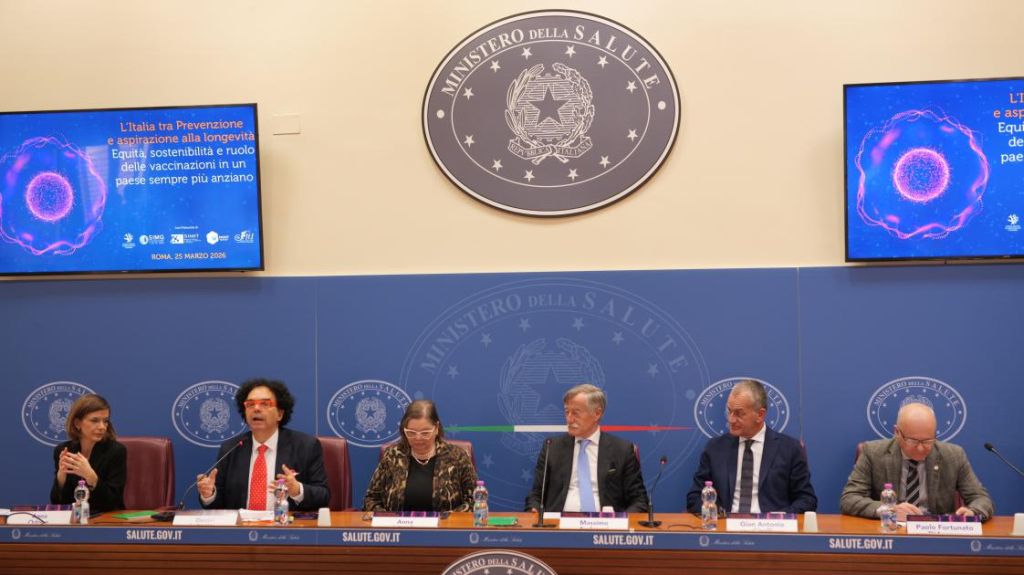
– photo Studio Communication Diessecom. From left Anna Odone, Superior Council of Health; Daniel Della Seta, scientific journalist; Anna Caraglia, Ministry of Health; Massimo Andreoni, Superior Council of Health; Gian Antonio Girelli, Member XII Commission, Social Affairs; Lucky Paolo D’ancona, ISS –
(ITALPRESS).