There are distances that do not measure in kilometers, but in class abysses and destiny. There was a time when the stations of Friuli were altars of a silent sacrifice. It was the Fifties, an era of wounded reconstruction, where bread still smelled dust and fatigue. From villages like Fiumicello, an army of young women left with a cardboard suitcase tied to the sword. They weren’t looking for adventure, but survival. In that suitcase there were no jewels, but a piece of cheese, a rosary and an invisible bag of granite values: honesty and ancestral confidentiality, able to swallow the secrets of the palaces that they would have inhabited.
In this forced migration scenario, the parable of Marta Sgubin shines like a crude diamond.
Martha was not just a worker; she was a sharp mind. Before challenging the ocean, he challenged the academies: he went to Paris, graduated from the Sorbonne and became polyglot, dominating six languages. It was not “only” a ruler: he was a learned woman who brought Friulian peasant wisdom to dialogue with the world elite. The contrast was strident: a girl who, with the same naturalness with which she sewed and cooked as a child, now discussed philosophy and literature in the most exclusive living rooms of Europe.
It was this rare combination of practical efficiency and intellectual stature to make it the only figure able to hold the psychological impact of Kennedy’s home. When Martha arrived in New York, she found herself catapulted in the epicenter of world power. The contrast was violent: from the fields of Fiumicello to Park Avenue, from poor broths to state banquets. Yet, Martha did not let herself glare. He brought with him that “spunk” – Friulian pride that does not bow before anyone.
Discovering that family dogs were left cold, Martha clashed with the strict Kennedy label: she claimed that animals slept with her. It was not a whim, but the need to bring human warmth into a house that was often deprived of it, despite the marbles and velvets. Jacqueline Kennedy Onassis immediately recognized that woman a close soul, a sentinel capable of protecting her children, John Jr. and Caroline, from the heaviness of their surname. Marta was the anchor of reality in a world of appearances.
Living with the Kennedys meant living a golden and terrible world. Martha recalls with a bitter smile the restlessness of John Jr., who for challenge freed snakes in the pipes. While the panic paralyzed the staff, Marta remained still. He managed the emergency with a frightening calm, the same one he used when preparing his mines to the Friuli for Jacqueline.
They were poor dishes that “Madam” sipped in the dark of the kitchen, looking in that flavor of land and vegetables a way to forget the weight of a crown of invisible thorns.
But what makes Martha a monumental figure is what she chose to never say. In an era of private exposure, his silence shines as nobility. It was the only foreign figure to the relative admitted to the bedside of Jacqueline in his last moments and the only one mentioned in the will of John Jr., who officially recognized her as part of the family. She, the girl with the cardboard suitcase, had become the moral guardian of the most powerful dynasty of America.
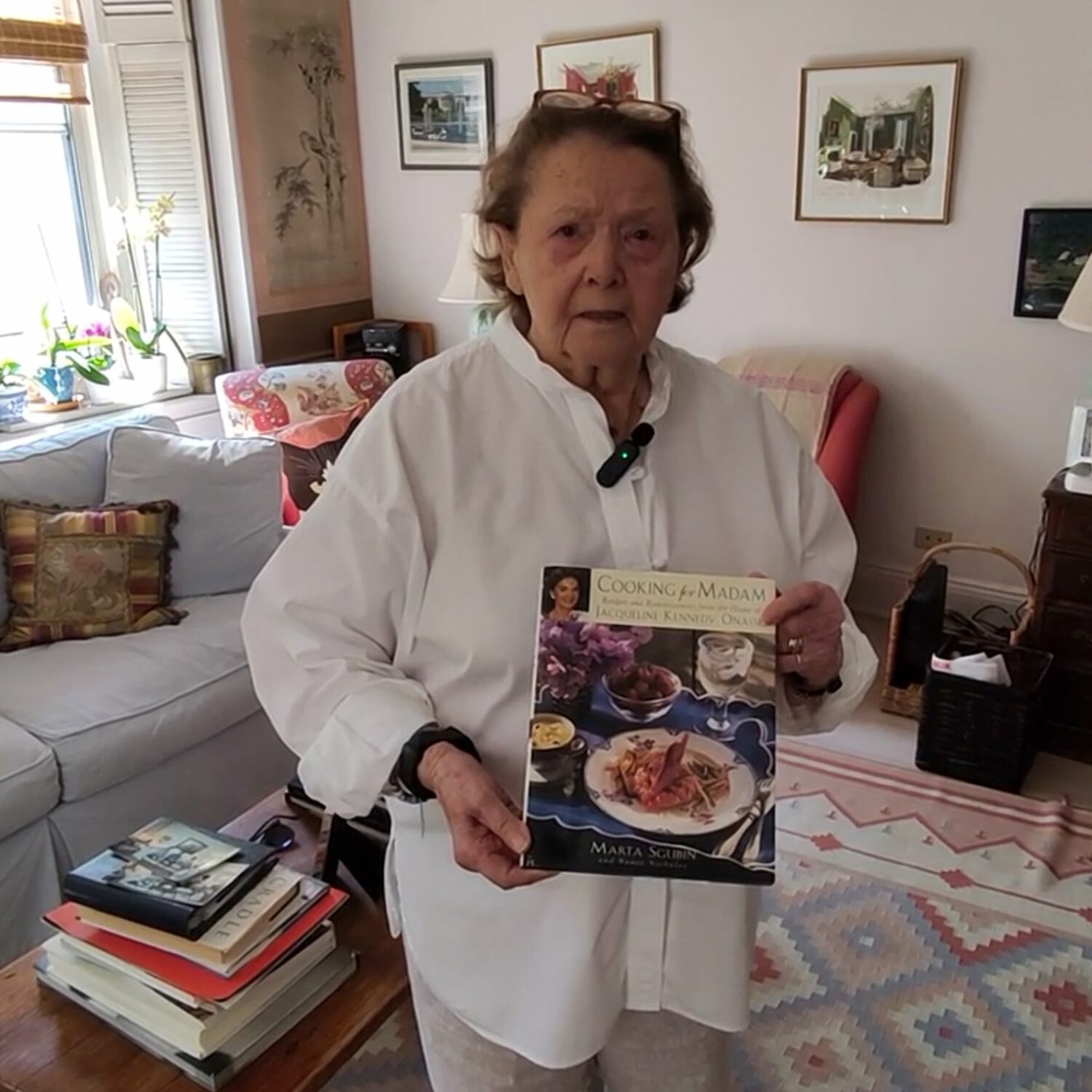
Today, having the privilege of being a friend of Martha means accessing a treasure chest that she opens only with the key to the “marilenghe” (linguamadre). Every time the work takes me to New York and I walk through the threshold of his house, time stops. The traffic jam on Park Avenue disappears as soon as I hear that greeting: “Mandi, cemût stastu?” – Hi, how are you? – tells me. In those three words there is the victory of those who have crossed the storms of history without losing a crumb of identity.
We sit between the smell of the owl and the heat of the grappa. In these chats, the Friuli becomes our secret code. I never ask you specific stories about the Kennedys; doing so would mean betraying an honorable pact. I limit myself to listening to what you choose to tell, honoring that confidentiality that was the compass of your existence. Ninety years old, Marta Sgubin remains a secular oak. I thank my life for this shared time, witness of an Italy that has honored the world with work and heart and total respect for others.
L’articolo Marta Sgubin, the Italian Kennedy babysitter proviene da IlNewyorkese.