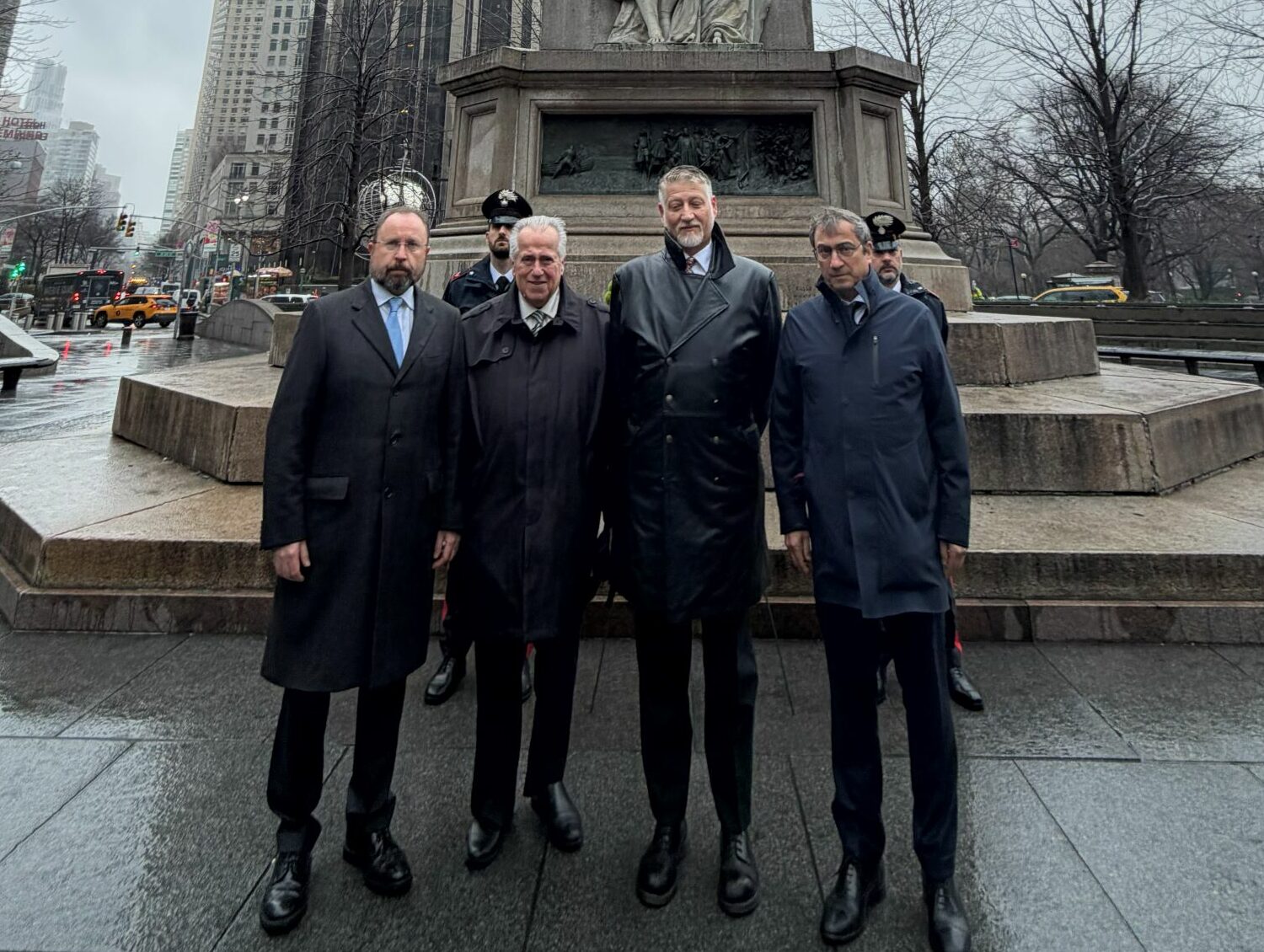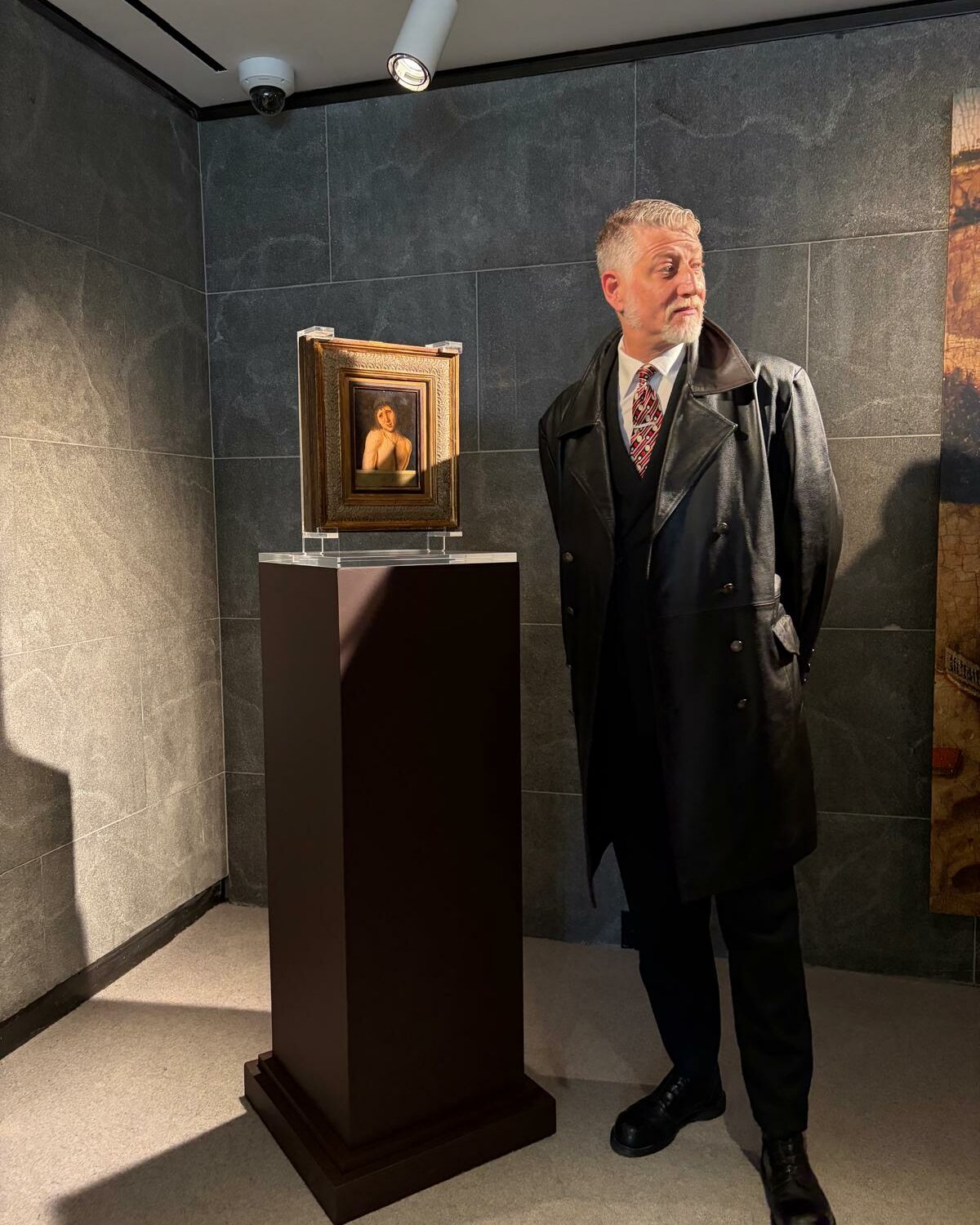
The diplomatic visit of the Minister of Culture Alessandro Giuli, in New York from yesterday where, among things, he laid a crown to the monument dedicated to Christopher Columbus Circle accompanied by a short ceremony, and then finalize the purchase of the Ecce Homo of Antonello Da Messina at the house ‘aste Sotheby’s.
After these meetings, in the evening of yesterday, the minister participated in the inauguration of the exhibition Raphael: Sublime Poetry, at the Metropolitan Museum of Art, one of the main museums in the world. The project brings together over 200 works including drawings, paintings, tapestries and objects of decorative arts, with loans from important international institutions and private collections. The path follows in thematic and chronological order the parable of Raffaello Sanzio, from the formation in the court of Urbino until the Roman years, when the artist becomes a central figure in the artistic production linked to the papal commission.
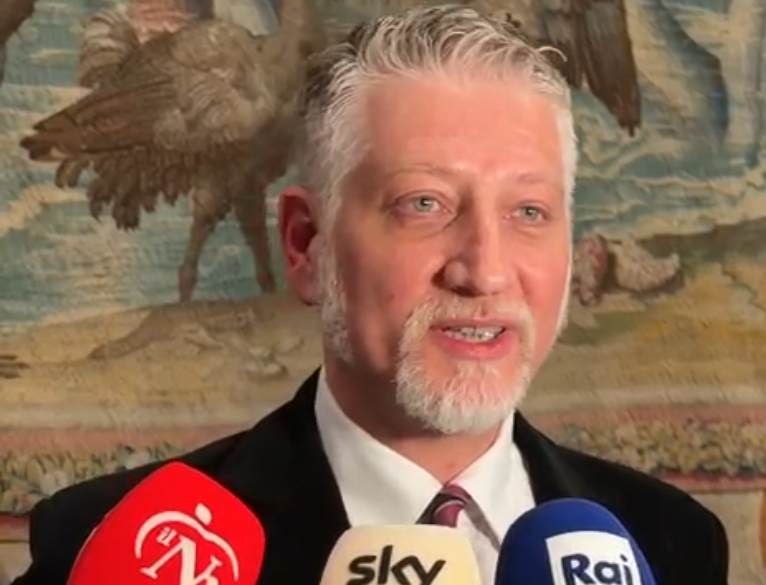
The minister, to the microphones of the journalists present, has emphasized the systemic value of the operation: «of research and contribution of the most important Italian museums for an exhibition that in the 250 years that the independence of the United States is celebrated Raffaello. Italy makes a historical, artistic contribution, exceptional, in an exhibition in which pieces from private collections appear, contributions from the most important museums in the world and this makes it even more important and significant the fact that Raffaello is representing this magical moment of Italian culture and this special relationship that unites Italy to the United States»
Da sinistra verso destra: il Console Generale a New York Giuseppe Pastorelli, il ministro Alessandro Giuli e l’Ambasciatore d’Italia a Washington Marco Peronaci
Giuli also insisted on a less immediate aspect of the contemporary story about Raffaello: his organizational and entrepreneurial ability. In his words, the artist is not only the author of iconic works but also a figure able to structure a complex workshop, work with great clients and build a productive network that today could be read as a proto-industrial model of artistic creation. Something that squeezes the eye on the idea of American dream, in a certain way.
Raffaello was a very capable man: he created a school, he was a man who gave us a sweet and dedicated art but he also lived a very opulent life and he was able to work with very important clients of private bankers, for example Agostino Figi. It has actually built a cultural wealth for itself, and an immaterial wealth and eternal material for all those who still admire it today
The exhibition will be open to the public from 29 March to 28 June and, as mentioned, will be the first major international loan exhibition in the United States dedicated to Raffaello (Raffaello di Giovanni Santi; 1483–1520), considered one of the greatest artists of all time.
Among the main masterpieces on display are The Madonna with Child and Saint John in a landscape (Madonna Alba) of the National Gallery of Art, one of the most emblematic examples of Raffaello’s mastery in the ideals of classical harmony and beauty of the Upper Renaissance, which will be put in dialogue with the preparatory drawings preserved at the Museum of Fine Arts in Lille, and the Portrait of Baldassarre Castiglione, today at the Louvre, widely considered one of the High Renaissance.
Although he lived just 37 years, Raffaello achieved such a profound success as a painter, designer and architect to be considered, for centuries after his death, the summit of artistic perfection. The son of a painter and poet, Raffaello entered into contact with the main writers and thinkers of his time in Rome, showing a poetic sensibility that fascinated the contemporaries and later generations. By joining ambition and lyrism, he created works with great intellectual thickness and emotional depth, essential qualities in the complex political panorama of the Renaissance courts.
Among the Italian lender bodies are: Accademia Carrara (Bergamo), Galleria Borghese (Rome), Galleria Nazionale Barberini Corsini (Rome), Galleria Nazionale delle Marche (Urbino), Galleria Nazionale dell’Umbria (Perugia), Fondazione Brescia Musei (Brescia), Museo Nazionale di Capodimonte (Napoli), Pinacoteca Comunale di Città di Castello, Pinacoteca Nazionale (Bologna), Gallerie degli Uffizi (Florence) and the Vatican Museums.
L’articolo Minister Giuli participated in the inauguration of the exhibition on Raffaello al Met proviene da IlNewyorkese.