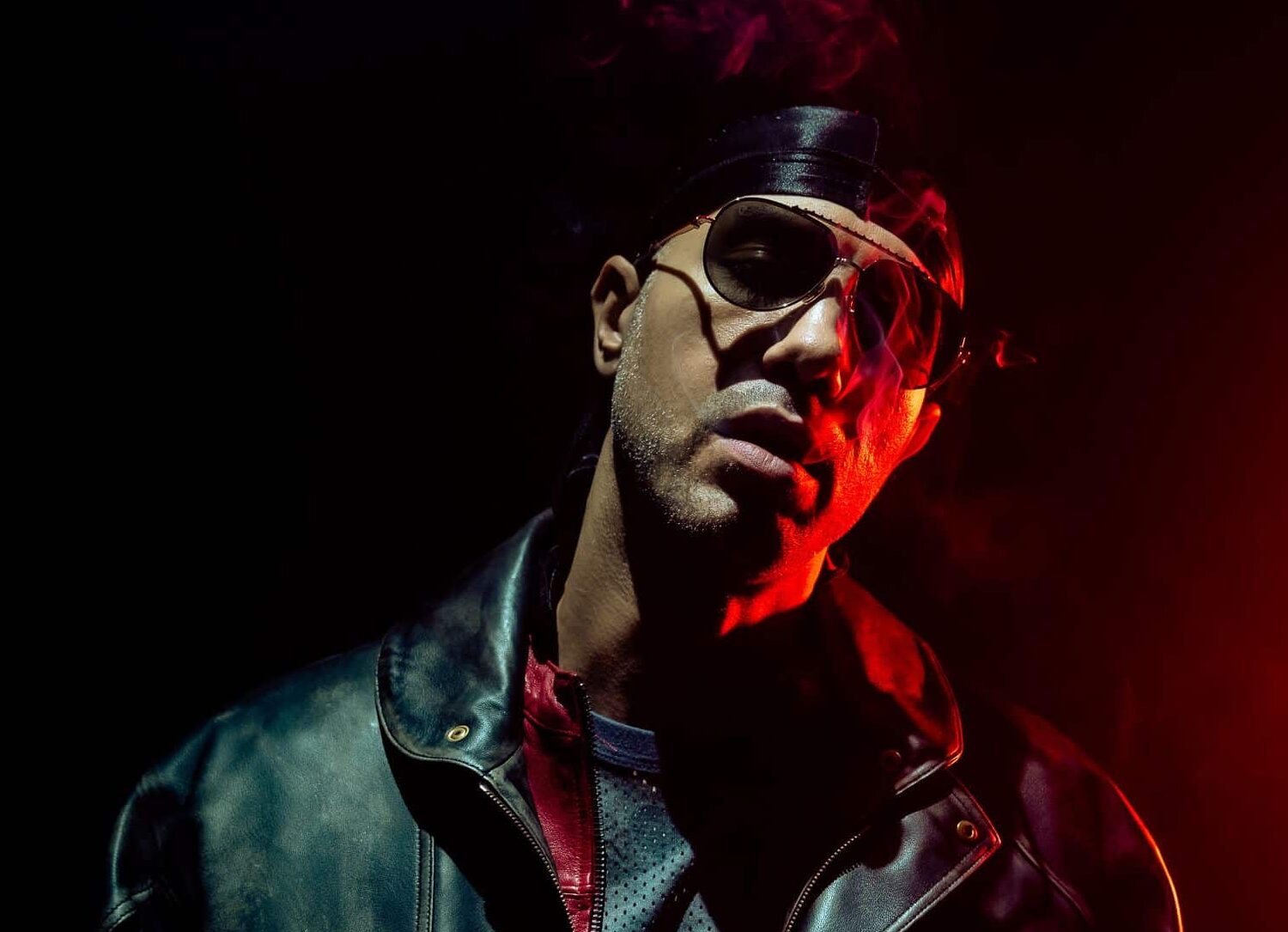
Twenty years after the release of Solo un Uomo, the album that in 2006 brought Italian hip hop to majors with a sound and an unpublished imagination, Mondo Marcio returns on that album to tell about its genesis, tensions, criticism and inheritance. A work written and recorded in the bedroom, when he was still 17 years old, which marked a decisive step for the Italian rap and his career. With him we traced that era, between American influences, sudden responsibility and the relationship with New York.
Let’s start from current events. He spoke of a “diatribe” with Psalm for a sampling present in your old single, “Senza Cuore”: what really happened?
I want to point out that there is no beef, no case and definitely no dissing. It was more a matter of little attention. They wrote me in many saying that I was “rubbed” a sample. The sample is not mine, it is a sample of “The Traitor” by Menahan Street Band, but if you are a professional in the industry maybe you do a research before sampling a single of your colleague. Among other things, the videomaker who shot the video of “Senza Cuore” is Alberto Salvucci, who is a videomaker of Machete. It was very little. That said, she was born and dead there, in those stories on Instagram.
So no escalation?
No. It was enough to talk about it. Eventually we all do music because we like it. If you use a sample, you can also say it quietly. Ego often complicates things uselessly.
Back to 2006. Where was Mondo Marcio in the scene of that time?
I was an underground artist, also because at the time hip hop was almost underground. I had won several freestyle contests, I was very young and at that time I was considered one of the most promising. This helped me get to majors: at the time multinationals did not give space to rap, so the planets aligned.
How much did American influences weigh in Only a Man?
So much. I grew up with the American rap: 50 Cent, G-Unit, Tupac, Ludacris, Timbaland. The sound was clearly influenced by that ecosystem. In Italy there was often a “Italian” version of hip hop. I brought a sound closer to the original matrix. I think he’s widened the possibilities of the scene.
Also in the themes you made a different choice than the most explicit rap gangsta.
Yes. I’ve never been a gangster. I talked about things that I lived: family, mother, father, inner conflicts. Closer to Tupac than to Eminem, if I have to make a comparison. Eminem was much more extreme, he made names and surnames, he talked about addictions and mental illnesses. I always told my life, but so that it was universal.
In those years Italian hip hop was still very tied to social centers and a political imaginary. Did you hear a foreign body?
There were criticism, it was physiological. There were no other routes besides the underground, so seeing someone who signed with a multinational could twist his nose. But in the end it was a victory for everyone. That record opened the market, it showed that rap could also work at the mainstream level.
What difference do you feel between the first album and Only a Man?
Creatively very little. Both were written and recorded in the bedroom, when I still lived with my mother. They were self-produced artistically. The difference was responsibility: a major had invested on me and I had become a kind of “poster child” of Italian hip hop. I felt that weight a lot.
And with Generation X, the next disk, what changes?
I was more aware. In 2007 I created my label, Mondo Records. For me it was essential to have my own record company, which then tightens agreements with multinationals. He gave me autonomy.
Why do you think Only a Man has remained, while today many records seem to last very little?
Because it introduced new things: chewed pronunciation, American sound, intimate themes. Everyone’s doing the piece on his mother, son, family today. Many adopt that kind of flow. It was ahead for the time and some of those choices became standard.
Today the albums are full of featuring. You’ve always used them with fear.
For me the creative act is personal. The featurings help streams, but stream hunting has never been my primary goal. I don’t care to do the “table” featuring the artist of the moment. If he’s not genuine, he feels.
Looking at your career, did you ever feel isolated from the scene?
No, I actually collaborated with so many Italian rappers. I’ve never built a clique, but I haven’t felt a real isolation. I’ve always followed my path.
Let’s talk about New York. What role did he play in your growth?
Over the years she has become home. It is a city that obliges you to give 110%. If you don’t, you won’t stay. He taught me to be the best possible version of myself. It is full of people who are busy, there is a productive and constructive energy that has formed me.
Is there anything that mentality you would take to Italy?
The desire to collaborate and build. In Italy there is often a more polemical and destructive climate. In the United States, when one succeeds, one tends to think: “How can I work with him?” Here sometimes prevails the idea that the victory of the other is your defeat. It’s a mentality that keeps everyone.
Twenty years later, just a man, what is that record for you?
It was the time when a door was opened. For me and for so many others. He showed that you could do rap differently and bring it up. It was a turning point.
What now?
I’m working on new music. After the single Despite Tutto, which also traces some stages of my career, I think that already this year could come something new.
The article “Only a Man” is 20 years old: Mondo Marcio tells the record that brought the Italian rap to major comes from IlNewyorkese.