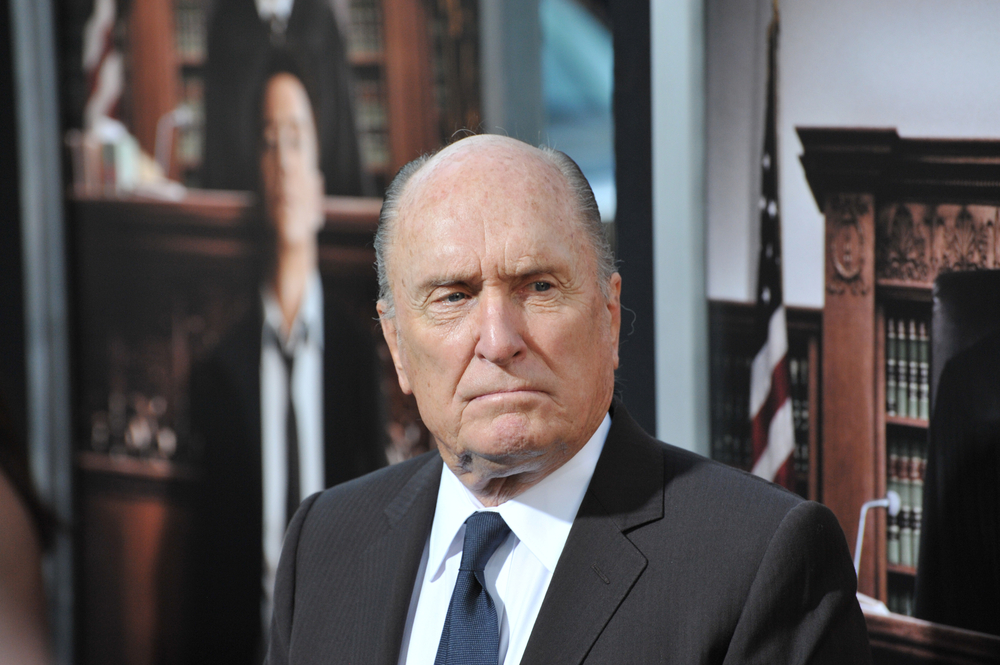
He died at the age of 95, Robert Duvall, one of the leading American cinema actors of the second century. The news arrived yesterday by his wife, Luciana Duvall, with a message published on social media: the actor turned off in his house, surrounded by the family.
Duvall has crossed over sixty years of cinema without ever really turning into a “star” in the most spectacular sense of the term: he was an interpreter capable of imposing himself naturally, even when he occupied a secondary space in films. Seven Oscar nominations, a win, two Emmys and a career that has crossed some of the most important directors and titles of American cinema.
His film debut dates back to 1962, with the short role of Boo Radley in The Dark Beyond the Hedge. In the 1960s he alternated cinema, theatre and television, working in films like True Grit and Bullitt, but in the early 1970s his career changed size.
In 1972 he played Tom Hagen in Il Padrino, the silent and rational adviser of the Corleone family. It is the part that consecrates him and is worth the first Oscar nomination. He will also return to the role in The Father – Part II. With Francis Ford Coppola will still work in The Talk and especially in Apocalypse Now (1979), where Colonel Kilgore pronounces one of the most famous jokes in the history of cinema: “I love the smell of napalm in the morning”. Also in that case comes an Oscar nomination.
In the same years he moves among the most popular films and productions: he is in the choral cast of Network (1976), fierce satire on the world of television, and consolidates his reputation as an actor capable of merging intensity and control. He did not have the explosive charism of Robert De Niro or Dustin Hoffman, his contemporaries, but was greatly appreciated the most restrained, often disturbing presence.
The main turning point comes with The Great Santini (1980), where he plays an authoritarian and obsessive father: the part is worth the first nomination as the best actor. The Oscar won it in 1984 for Tender Mercies, in which he created an alcoholic country singer in search of redemption. It is an almost minimal performance that becomes the model of a certain American realism of the 1980s.
Duvall is not limited to acting. He directs and interprets The Apostle (1997), a story of a charismatic and violent Texan preacher, who brings him further candidacy to the Oscars and the award for the best film at the Independent Spirit Awards. He also writes, directs and interprets Assassination Tango (2003). His interest in marginal and obsessive characters remains a constant.
In the 2000s he continued to work regularly: he was in Kevin Costner’s Open Range, in The Judge (2014) next to Robert Downey Jr. – a role that earned him the seventh Oscar nomination – and in Crazy Heart films, which many ideally matched his Tender Mercies. Among the latest works, The Pale Blue Eye (2022).
Not only cinema, anyway: Duvall is the protagonist of the Lonesome Dove miniseries (1989), he obtained Emmy nominations for Stalin and The Man Who Captured Eichmann, and won two Emmys for Broken Trail (2006), contributing to strengthen the role of the original cable productions in the United States.
Born in San Diego in 1931, the son of an admiral of the U.S. Navy, grows among several American cities. After the military service, he studied acting in New York with Sanford Meisner at the Neighborhood Playhouse, where he became friends with actors such as Gene Hackman and Dustin Hoffman.
Robert Duvall played military, police officers, judges, preachers, authoritarian patriarchs and men in crisis. He crossed the western, urban noir, political drama, war cinema and independent. Without ever changing the register and remaining faithful to an idea of almost artisan acting. Duvall was one of those who, even when he was on the second floor, ended up in memory.
L’articolo The long career of Robert Duvall, between “Il Padrino” and “Tender Mercies” comes from IlNewyorkese.