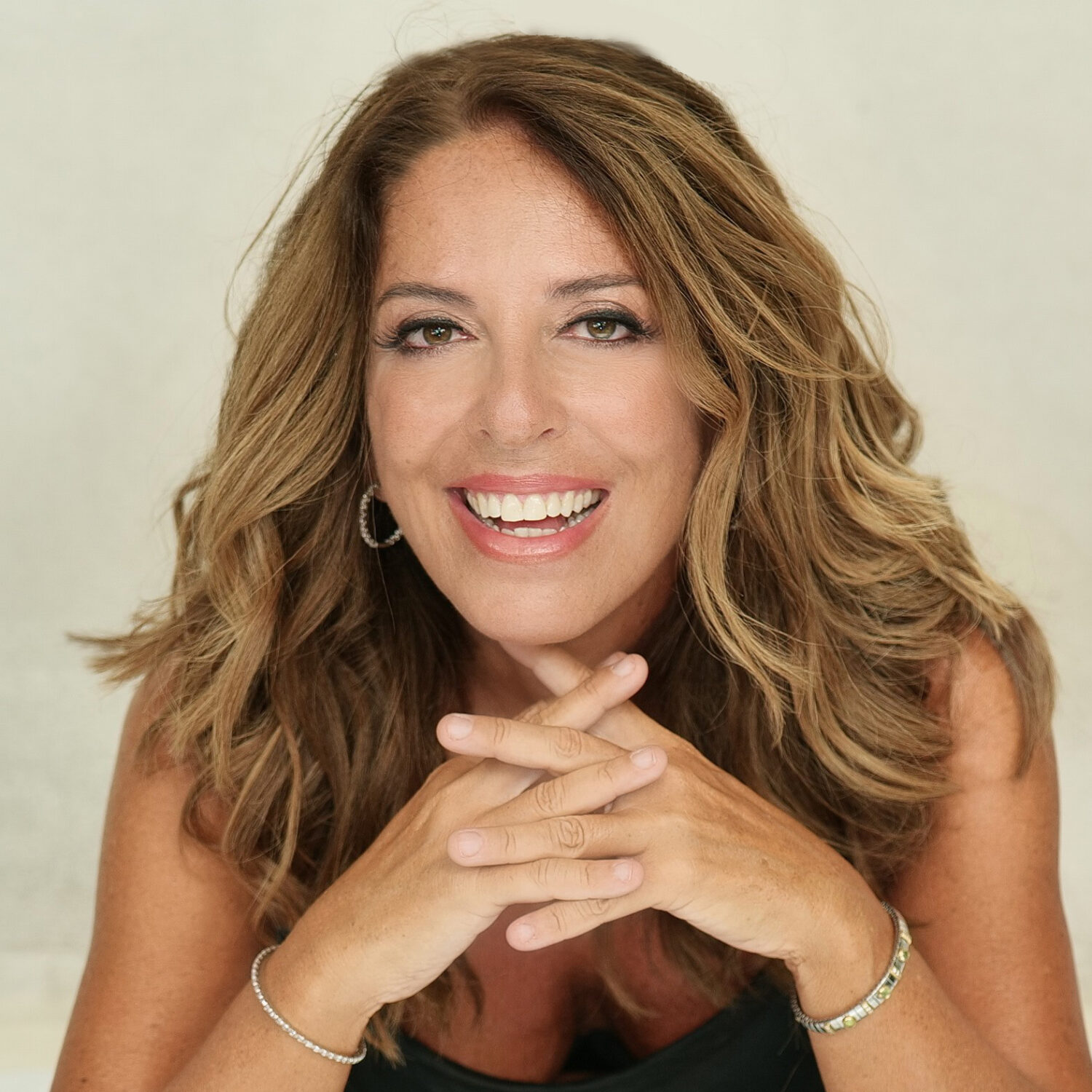
In this long conversation with New York, Cristiana Pegoraro retraced the fundamental stages of his career, which began at only four years starting from Terni and developed between Salzburg, Berlin, New York, passing from Australia and continuing to turn the whole world. Because music has no boundaries and this Christian Pegoraro has already understood it as a child. With great humility, he spoke to us about the role of study, discipline and importance of the relationship with the public; the transformative power of music and the responsibility of an artist in inspiring peace and beauty. He then told us his connection with Umbria and the figure of Valentine, and finally he unveiled the most hidden part of the artist’s craft: daily fatigue, often invisible, which makes the magic of the stage possible.
How was her passion for music born and how did her journey begin?
My passion for music was born immediately. I started playing the piano at four years because at the kindergarten I was lucky to meet a music teacher who made us move the hands on keyboards. It was a love at first sight. Shortly after I started taking lessons with a teacher and in a short time I had already realized that would be my life. I think it was a passion that I brought in and bloomed approaching a keyboard.
From the Terni Conservatory to the international stages: how did he build his artistic path?
I was born in Terni and, having started very early, I studied in my city, where I graduated at sixteen years with the maximum of votes, praise and honorable mention under the guidance of the master Elio Maestosi, who made me fall in love with music even more. But Terni went a little tight because I am a person who loves to get involved, see, know. So, after graduation, I went to study at the Mozarteum in Salzburg, one of the best schools in the world, with renowned teacher Hans Leygraf, and there I spent five years. I was the youngest student in the class and the most inexperienced. In class there were pianists even ten years older, winners of important international competitions. I learned so much. In the meantime, I was perfecting in Vienna with a great pianist, Jörg Demus. Then I went to the university at the Hochschule der Künste in Berlin, and from Berlin I jumped the ocean to New York. I’ll make you smile: I got there away from Australia. I won a selection that brought twenty pianists from all over the world to the Sydney International Piano Competition. There I met a very good pianist: I was looking for new experiences and a new teacher and he advised me a Russian teacher in New York, Nina Svetlanova, one of the last heirs of the great Russian school of Heinrich Neuhaus. So, via Australia, I packed my bags and came to New York. A life full of adventures and discoveries that brought me right here in the Big Apple.
A life on the road. Have you never had the temptation to stop and stay in its comfort zone?
Never. What I reached and that could seem to me already a result was always a starting point towards another goal. I never stop: I always seek experiences that allow me to improve. I’m not a person who’s content and I can’t stay in the same place for a long time.
How much do talent and training count in achieving the highest levels?
A musician is like a sportsman: We share ideals, values and the same type of training, only that we use a different language, that of music. Talent is the starting point, because no one goes anywhere. But it’s just part of the way, I’d say almost a small part. Then there is so much work, so much knowledge to acquire, hours and hours of study every day. It’s like training a sportsman: we train the muscles, even if not in an audience, and we train the brain, self-control, sensitivity, because the executions must be as convincing as possible. The training is a huge part of this route.
What relationship does it have with the obsession of perfection that often accompanies those who excel?
I am a character perfectionist: All I do must correspond to my idea, and I always want very high results. The piano is in this sphere. “Excession” is perhaps a great word: I would call it passion. Passion to succeed in doing what I want and to maintain the reached level, which is sometimes even more difficult than to get there. I like the challenges, but I try to deal with them with passion and humility. Humility is essential. Putting itself into play means recognizing its limits and trying to overcome them, with the desire to do and do well, sharing the beauty and message behind the music with the greatest number of people.
What do you feel about the moment you’re about to start a concert?
I’d say excitement. I am well on the stage: there takes the moment of great sharing. I’m happy to share my music. The piano becomes an extension of my body and personality. And when we have beautiful tools, which allow us to work on the nuances and details, it is a great excitement: It’s like getting naked, getting emotions out. And then I drive the instrument and I also drive the audience. In my concerts I tell a lot: I do not limit myself to sit, play and go away. To establish a dialogue with the public for me is essential: talk, tell, play, share. That moment on stage is my greatest joy.
How important is it today to tell the music and dialogue with the public?
Very much. Today, a part of the musical culture was lost, allowing you to go to a concert and immediately understand the artist’s interpretative art and the songs planned. For a number of reasons this knowledge has decreased, and I think it is important to bring the audience closer to the tracks performed. You can do it through language: tell, explain, share anecdotes. Sometimes I also smile at the audience, because classical music is not a sad, serious and obsolete thing. She is alive, and often rich in fun aspects. Colloquiating with the public means taking it by hand and bringing it into the piece I go to perform. It is important to understand what I will say with the notes.
In Carnegie Hall, in November, he dedicated the concert, which was a great success, to the theme of peace. What did it mean to her?
As an artist I feel compelled, from the stage, to share important messages. At that moment I have people’s attention and can try to inspire them. For this reason in my concerts often develop the themes, and today the theme of peace is central. Being able to do this through music and through the example of the great composers is fundamental. The concert at Carnegie Hall, presented by the Permanent Representation of Italy at the United Nations, was exciting and very important for me. I often collaborate with the United Nations on such issues. Bringing peace on a stage like that, in front of people of the United Nations and an international audience — New York is a melting pot — and feeling all brothers and sisters through music was incredible. I will certainly not change the world with a concert, but I can try to inspire my audience, to reflect, to become better people. A small journey that each of us can make towards peace, starting from the inner one, through the beauty of music. Let us remember that music is that universal language that goes beyond any barrier and speaks directly to the heart and sensitivity of human beings.
Interesting theme, which was at the center of the concert, of the inner journey. How did you build it?
The program was developed as a journey, the journey of life: departure, discovery, challenge, dialogue, smile, love, passion, wisdom. I grouped the songs under these themes, giving also examples of great composers. Let’s think of Beethoven: what an immense challenge was his life. A composer who begins to become deaf at thirty years… is a huge drama, but he has overcome it in a brilliant way. His life is an example. Maybe in our little one we can do the same.
Humility, depth, research: they are qualities that emerge strongly in his story. How much do they count in his vision of art?
They count a lot. I like to communicate and always try to improve myself. Further I go on, the stronger I feel in my role not only as a pianist, but of those who share messages of beauty and depth through music. Life is a wonderful gift: it would be a waste to live it superficially. If I can be a way to make someone more serene, happier, more inspired, I feel satisfied.
After many years in the world, she returned to represent her land as a witness of Umbria. What does that mean to you?
The roots never forget. When I return to Umbria I recognize smells, flavors, colors: it is a return home. I move around the world, but I never forget where I come from. Getting to know this beautiful land to so many people makes me proud. Bringing Umbria into my heart around the world makes me very happy.
He is also a Valentine’s ambassador in the world. What does this role entail?
When you say “San Valentino”, everyone thinks on February 14, chocolates, roses, romantic dinner. But Valentine’s Day was a true saint, and his remains are in the Basilica of Terni, my city. He is a saint who has accomplished miracles, and there are historical testimonies that many do not know. Addirittura in Russia found icons representing it. The Valentinian Cultural Centre of Terni has appointed me ambassador in the world: through my art I promote the true figure of the saint, bringing the Valentine’s Day back to its origins. And of course there is the theme of love, which I consider the most important thing in life. I’m taking this message to my concerts. I also composed a song dedicated to Valentine’s Day, Colors of Love, which became a video shot in the basilica. It is a way to promote my city, my land and the figure of the saint.
How has the perception of Italians in the United States changed over time?
At the beginning of the last century the Italians who arrived in America were emigrants looking for a better life. They had to accept huge compromises and humiliation. Now the Italians who come to America are extremely prepared and occupy important roles. The level of what we export is very high. The ‘Made in Italy’ is a very powerful brand. It remains a fact: when you say “I’m Italian” everyone looks at you with huge admiration. Italy is perceived as a beautiful place, a country with great history, culture, traditions, wonderful food, excellent climate. We are privileged: in the world being Italian is always an advantage.
Is there something I didn’t ask you and you wanted to come out?
Perhaps the life of the artist: What does that really mean? Many see us exclusively in the final stage, or on a stage, happy to do what we love, and this is true. But there is a life behind the scenes made of huge sacrifices and then the difficulties of moving in the world: endless trips, late flights, lost suitcases, time zones that turn your body… so many aspects make this life very complex. An artist loves what he does, but he is a professional: every day you have to conquer something, we have a very hard study path and when we get on stage there is a huge amount of work behind. I would like this to be appreciated as the performance. Unfortunately I must say that in Italy artists are not always considered as they should. In other parts of the world there is more consideration, in Italy we sometimes seem a forgotten, underrated category. Yet art is fundamental in the life and education of every person, from child to adult. Artists should be supported and valued, because through art we try to make life more beautiful.
Article The journey of a global pianist: the history, vision and values of Cristiana Pegoraro comes from IlNew York.