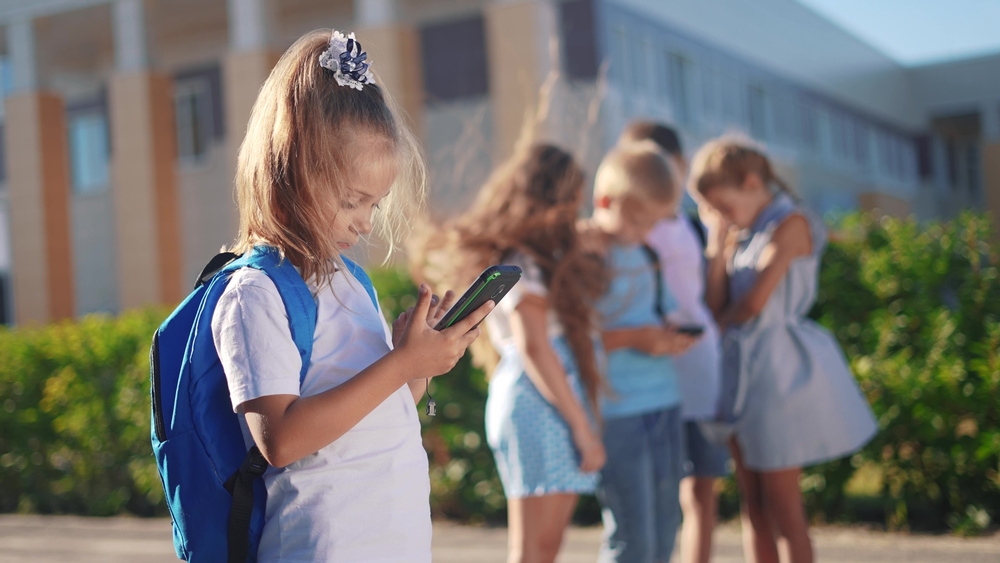

In hyperlinked society, young people no longer form their opinions only between school benches or at home. TikTok, YouTube and ChatGPT become the main mediators of their world experience, often without filters or adult supervision. Behind every recommended video or automatic response is an algorithm that decides what to see, what to think and even how to feel. In this scenario, Italian schools are at a crossroads: passively suffer these digital dynamics or become critical resistance spaces, where children can understand, discuss and participate in democratic dialogue.
I conducted a research based on 13 in-depth interviews. I spoke with primary and secondary school teachers and school leaders involved in the design of curricula and in the digital policies of their institutions. The goal was to understand how Italian educators perceive and react to the growing influence of social media and artificial intelligence in the lives of young people.
Historically, education has accompanied the moral and cognitive development of boys, but today digital platforms compete directly with school and family. Recommendation engines, designed to increase involvement, risk creating “echo chambers” that strengthen existing ideas and power polarization or extreme ideologies.
The echo chambers are not an abstract phenomenon: They manifest themselves daily in personalized feeds, where students receive content that strengthen their beliefs without offering alternatives. In this context, education can intervene with targeted strategies: Comparison between different sources, production of reflective media content and discussion laboratories can develop the ability to analyze and argue conflicting information. Some concrete examples include the creation of “digital-class newspaper”, where the boys comment articles with different perspectives, or the realization of videos or podcasts that tell alternative stories to extremist narratives. In this way, the school becomes a space where thought and sensitivity are exercised in practice, forming men and women capable of recognizing algorithmic manipulations and actively participating in the public debate.
In this context, two educational approaches emerge strongly. Media Education, widespread in Europe, provides critical tools to decode media messages, asking questions such as: “How do I recognize disinformation?” Educomunication, born in Latin America, goes beyond: it stimulates young people to become active communicators, capable of co-creating meanings, and to build communities.
A fragmented picture emerged from the interviews. Most schools have no systemic strategies to address digital culture in a precise way. Practices are based on the individual initiative of the teacher, without tools or institutional guidelines.
There are no spaces for shared analysis of online content or to reflect on polarization and radicalization. The school thus risks becoming a passive spectator of dynamics that deeply influence the minds of students.
Yet, even in this apparent difficulty, encouraging signs emerge. Some teachers seek more active involvement, experience dialogue methods and introduce moments of critical reflection in their classes. These individual experiences find a wider parallel in European projects such as MEDIADELCOM, which create transnational networks to develop educommunicative practices that can counter disinformation and promote digital citizenship. In this way, the commitment of individual teachers can fit into more structured strategies, opening up collaborations, sharing good practices and mutual support between schools in different countries.
The central node, as my analysis emphasizes, is not only technological, but cultural. Without continuous training, dialogue and systemic support, digital literacy may remain a formal exercise, unable to develop resilience against polarizing or manipulative content.
Artificial intelligence is no longer a simple tool: plasma our perceptions, social interactions and access to knowledge. In Italy, schools are still learning to measure themselves with this new ecosystem. The challenge is not technical, but educational: create spaces where students can speak, doubt, participate and attribute meaning.
In a world dominated by personalized feeds, the school can become an anchor of reason, empathy and interaction. The commitment already shown by some teachers can become the basis for a more conscious, resilient and active civic participation.
L’articolo School and algorithms: educating to citizenship in personalized feeds proviene da IlNewyorkese.