MILAN (ITALPRESS) – The environment is one of the main determinants of health: the quality of air, water, food and space in which we live significantly affects the well-being of the organism. This is precisely the field of study of environmental medicine, a discipline that in recent decades has taken an increasingly important role also in relation to the spread of chronic diseases such as respiratory, cardiovascular, allergic and some tumors that can be influenced by exposure to harmful environmental agents: environmental medicine is not only about doctors, but involves institutions, public administrations, urbanists, environmental engineers and citizens; environmental protection is in fact a public health strategy.
“Parallelamente to genetics and lifestyles, the surrounding environment affects our health: for the Oms 25% of all diseases and premature deaths is of environmental origin,” said Alessandro Miani, president of the Italian Society for Environmental Medicine (Sima), interviewed by Marco Klinger for Top Medicine, TV format of the news agency Italpress.
The main health emergency, Miani explains, “is that linked to air pollution: unlike what can be thought, the first cause of disease or death is given by cardiovascular problems, therefore stroke and heart attack, followed by problems of the respiratory system, therefore asthma and bronchitis. Studies link air pollution to other pathologies, including metabolic and cognitive type: it is associated with even a greater risk of contracting Alzheimer’s. One of the main factors is related to exposure over time: there is no action-reaction, we talk about a mechanism that goes on for decades“.
The second emergency of environmental origin is linked “to the water: the one coming from the aqueducts is very good and more controlled than that in bottle; apart from any unpleasant flavors linked to some residue of chlorine, which can be removed with activated carbon filters, for the rest the one coming from the aqueducts is an excellent and more sustainable and economic water to consume. Pollutants affecting water bodies are many, from pesticides to solvents to microplastics and nanoplastics: some of these are very persistent.”.
Where necessary, Miani continues, we try “to intervene with reclamations to ensure the health of people: as citizens on the one hand we should try to consume a little less water, since the Italians consume about 245 liters a day and our aqueducts have an average loss of 40% in the center and south, on the other we should avoid throwing in the domestic waste those substances that would not go there, as for example the poured oil. Italy is one of the most rich European countries of sources, sources and falde, but globally the data tell us that the problem of available water is already emerging: because of the water crisis we will have a greater amount of migrants, in addition this will be one of the causes of the wars of the coming decades”.
Among the aspects that can significantly affect health there is urban design: this, according to the president of Sima, happens because “often and willingly the cities in which we live today sick or on the contrary care: the determinants are an excess of traffic, a shortage of green, a non-equitable distribution of urban green. 90% of our lives pass it in confined environments: here the air, the main determining factor in health, is on average five times more polluted than on the outside and it is necessary to act in this sense; on the one hand there are smart systems to monitor the air, on the other you can introduce a little vegetation inside our enclosed spaces; some plants, about 13-14, can reduce this kind of pollution but have no decisive character.”.
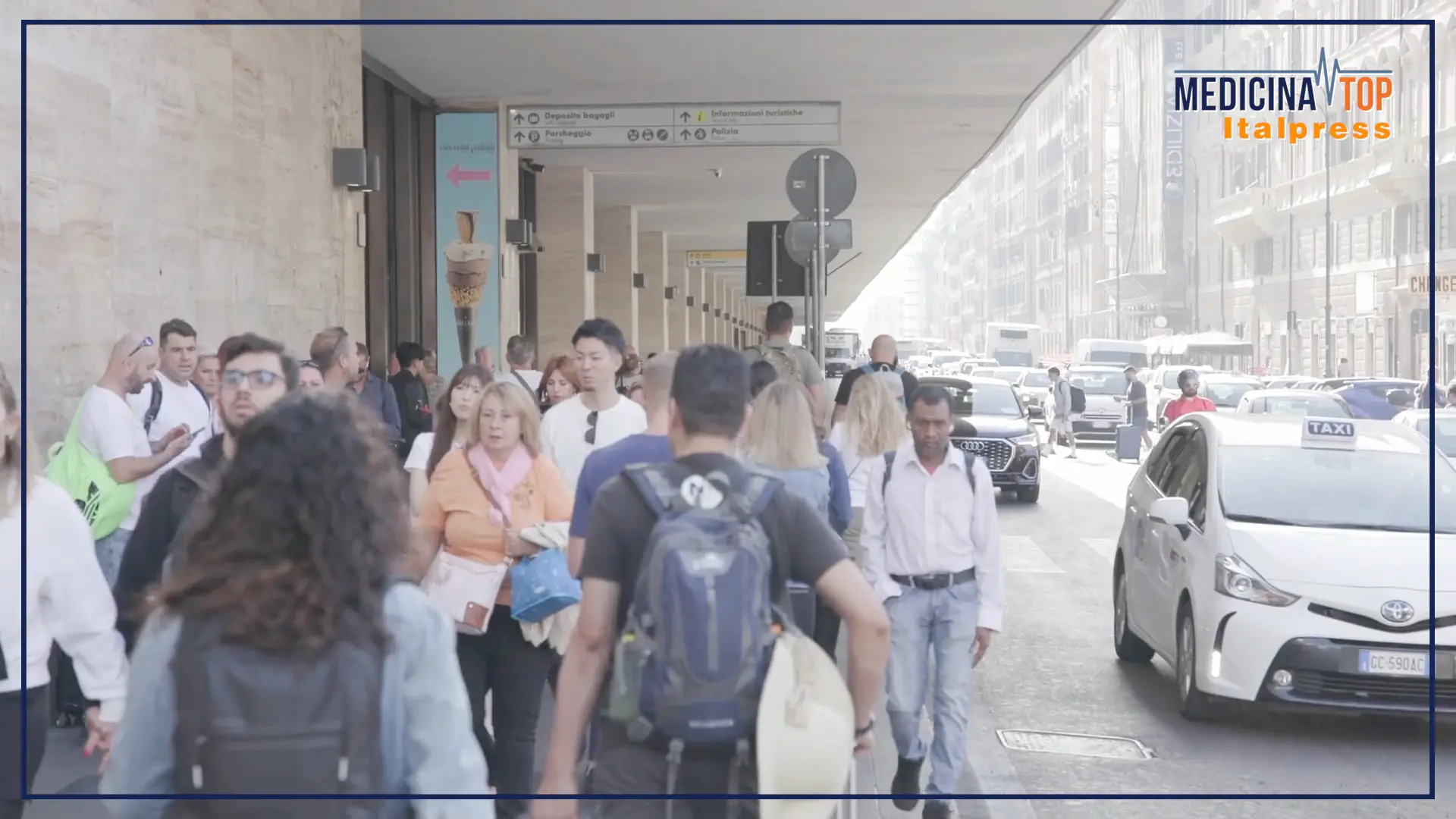
-Photos taken from video Top medicine
(ITALPRESS).